

Research across Abu Dhabi and Yogyakarta

Postdoctoral fellowWireless communications

I NyomanAprazRamatryana.

Designing reliable access for 6G-scale networks—from jamming-resilient grant-free transmission and RSMA-ALOHA to cell-free massive MIMO and compressive sensing.

LinkedIn profile photo of Dr. I Nyoman Apraz Ramatryana
Academic bridge / Connected researchUAE · Indonesia
FocusMassive access and resilient wireless systems
Massive Random AccessRSMA / NOMANextG RAN / Cell-Free MIMOResilient Grant-Free Access
KU / UNUAcademic bridge
Khalifa University logo
Postdoctoral affiliation
Researcher journey
Universitas Nahdlatul Ulama Yogyakarta logo
Teaching affiliation

Two institutions in one academic journey

Research shaped across Abu Dhabi and Yogyakarta.

Current appointments connect advanced wireless research in Abu Dhabi with teaching and research in Yogyakarta. The theme presents both academic contexts as parts of one professional journey. It does not claim a formal university partnership.

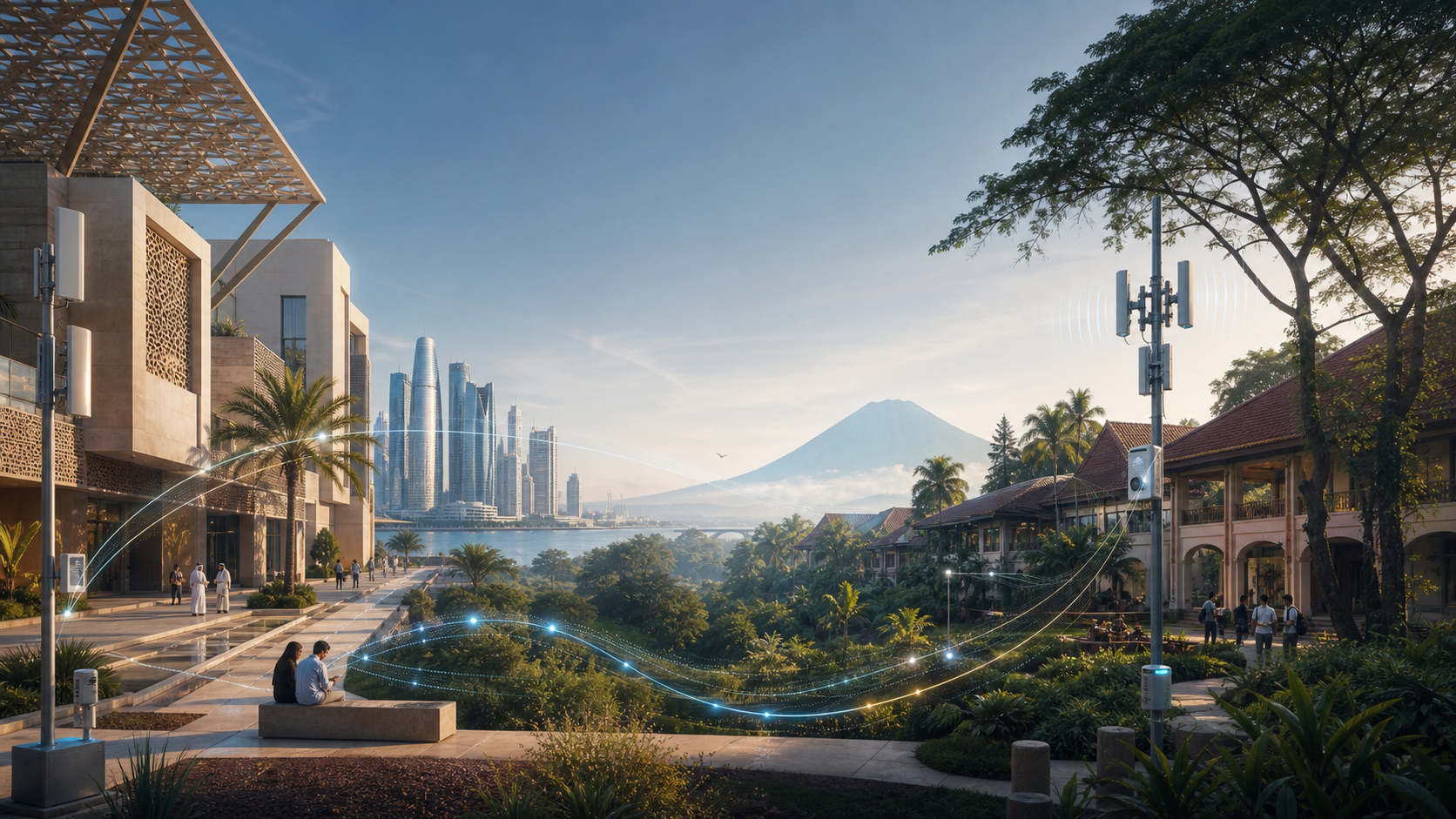
Artistic academic landscape connecting Abu Dhabi and Yogyakarta through wireless research signals
Khalifa University / UNU YogyakartaTwo campuses. One research journey.

Research moves between advanced network questions and practical application contexts. Teaching keeps the ideas connected to learners. Wireless systems form the common technical language.

Academic bridge panoramaCommunication research connected across two current academic roles.

Editorial affiliation study

01Inquiry

Resilient systems research

Grant-free access, anti-jamming methods, and distributed radio systems address dense wireless environments. The work studies reliability under contention and interference. It connects communication theory with future network requirements.

Academic context

Khalifa University provides the current postdoctoral research context. The portfolio remains the researcher’s independent professional record. No institutional partnership is claimed.
02Teaching

Knowledge moving into practice

Wireless communications and signal processing connect mathematical ideas with student learning. Priority-aware access provides practical examples for heterogeneous traffic. Intelligent systems extend the discussion toward emerging applications.

Academic context

Universitas Nahdlatul Ulama Yogyakarta provides the current teaching context. Research topics support that academic role. The theme represents one researcher across two appointments.

03Reach

Research for connected services

Cell-free MIMO, radio-over-fiber, and compressive sensing connect network efficiency with practical sensing. Low-overhead multiple access supports dense device populations. These methods motivate applications across health, mobility, industry, energy, and agriculture.

Academic context

The academic bridge links advanced technical questions with societal application contexts. Each scenario remains prospective and research-aligned. It does not represent measured deployment impact.
Application horizons in Indonesia

Six research-aligned contexts connected to practical needs.
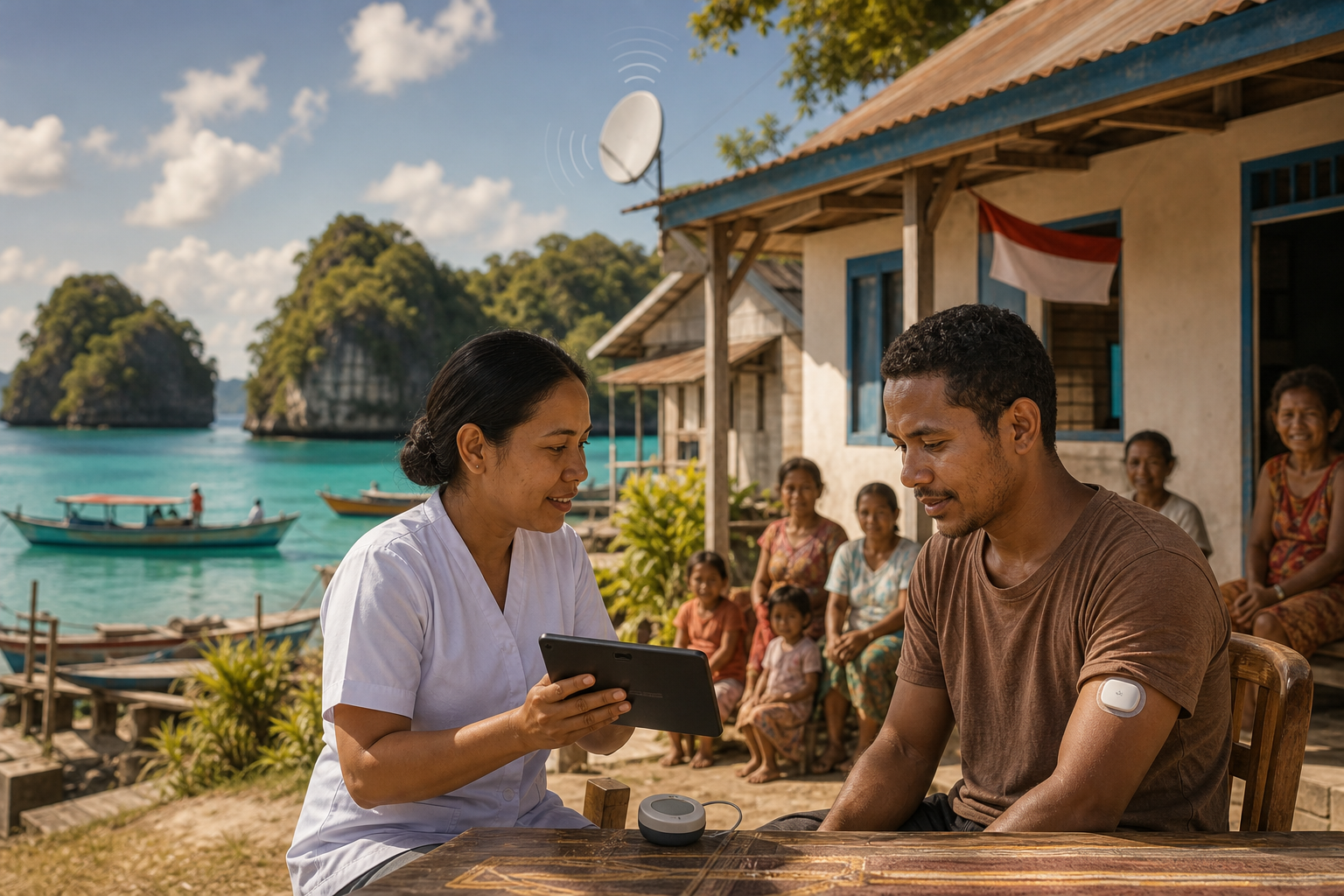
Community health worker using connected monitoring with a resident in a coastal Kei Islands settingKei Islands · Maluku
01Remote health

Connected monitoring and efficient medical-image reconstruction

Illustrative application setting
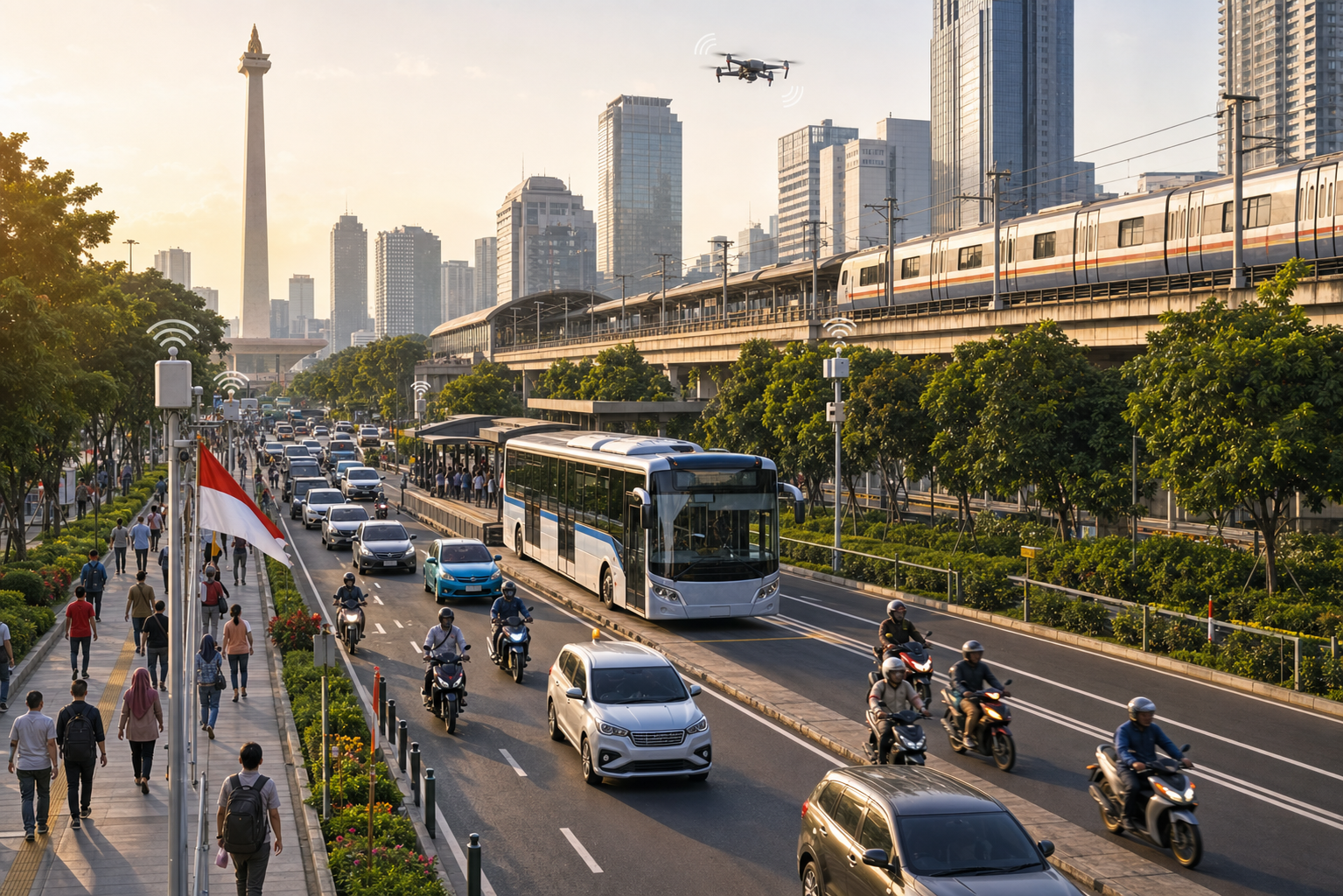
Connected public transport, road traffic, rail, sensors, and a drone in JakartaJakarta · Java
02Smart mobility

Dense vehicle, roadside, and aerial communication

Illustrative application setting
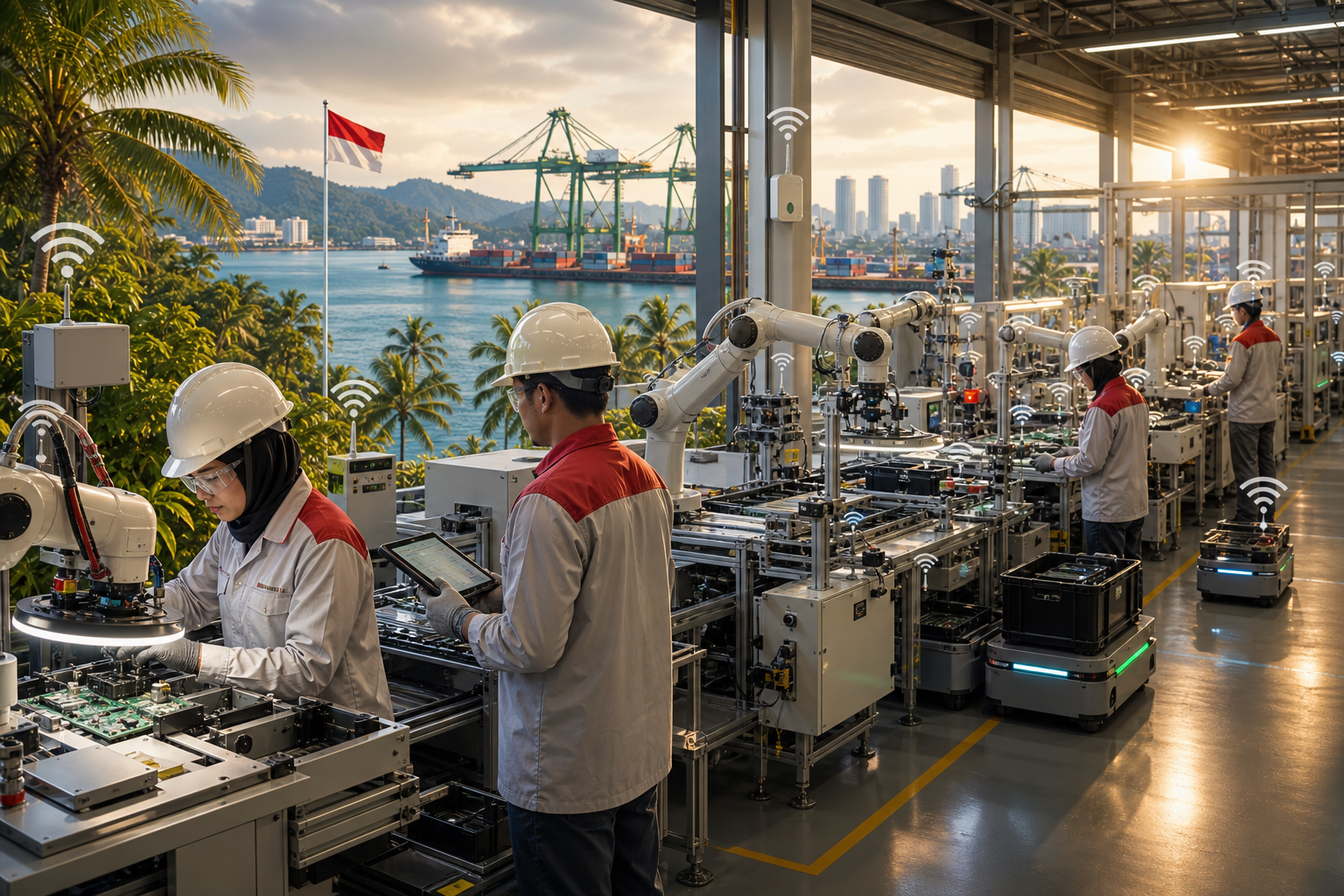
Indonesian technicians working with connected robotics in a Batam factory and port settingBatam · Riau Islands
03Industry

Reliable machine sensing and distributed automation

Illustrative application setting
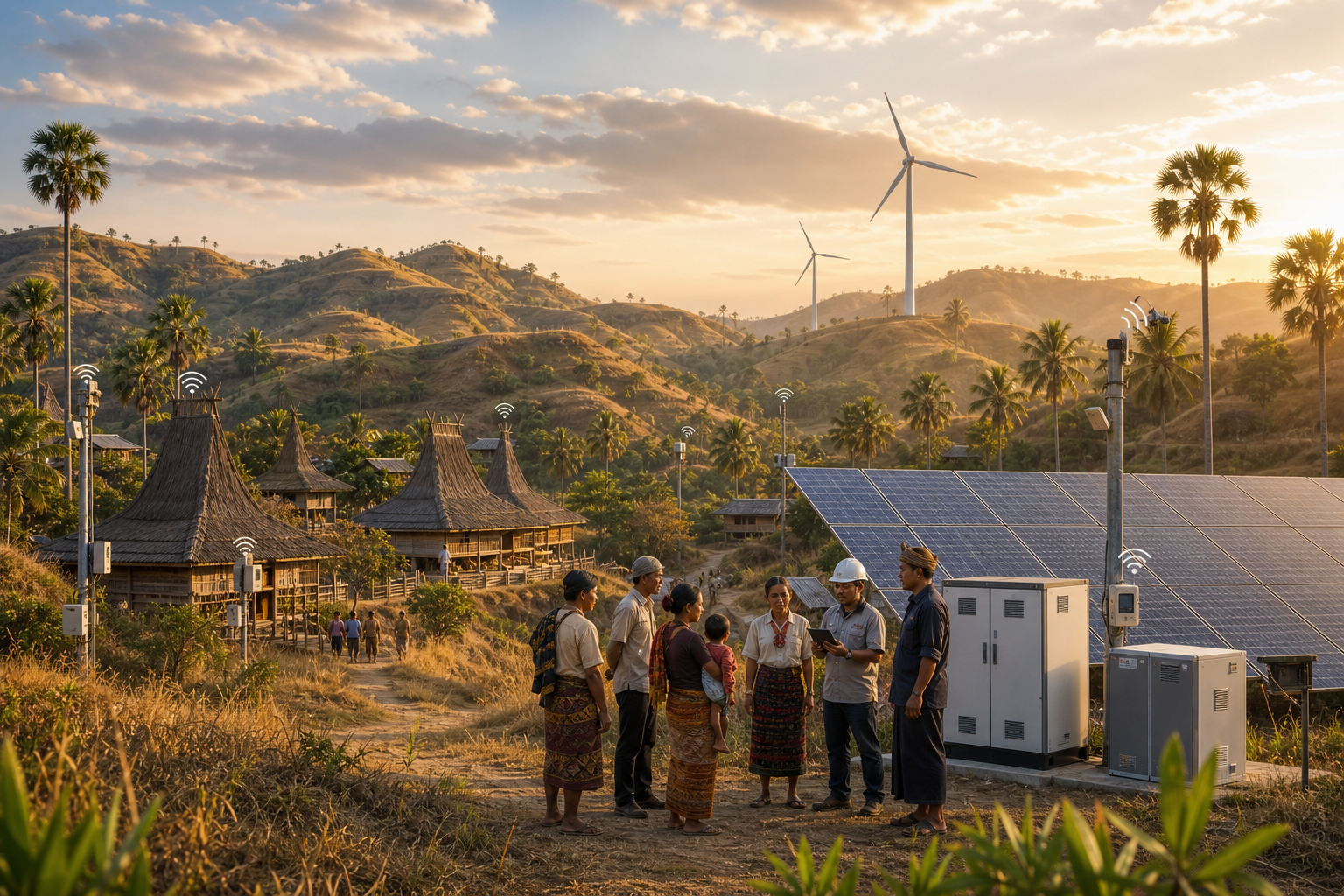
Community-scale solar, wind, battery, and wireless monitoring in the hills of SumbaSumba · East Nusa Tenggara
04Energy

Networked awareness for distributed infrastructure

Illustrative application setting
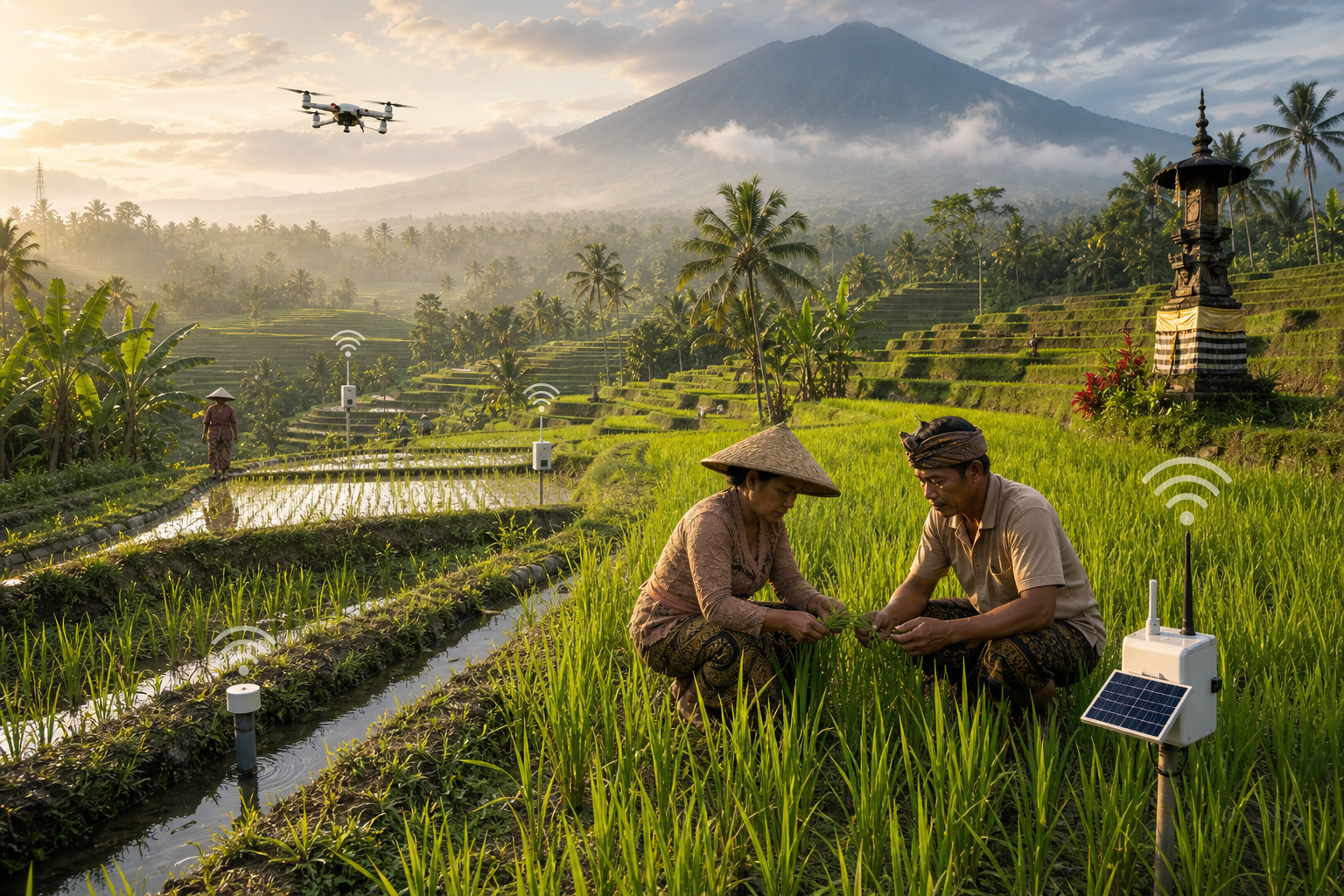
Balinese farmers using field sensors and an agricultural drone in terraced rice fieldsJatiluwih · Bali
05Agriculture

Wide-area sensing and sparse-data reconstruction

Illustrative application setting
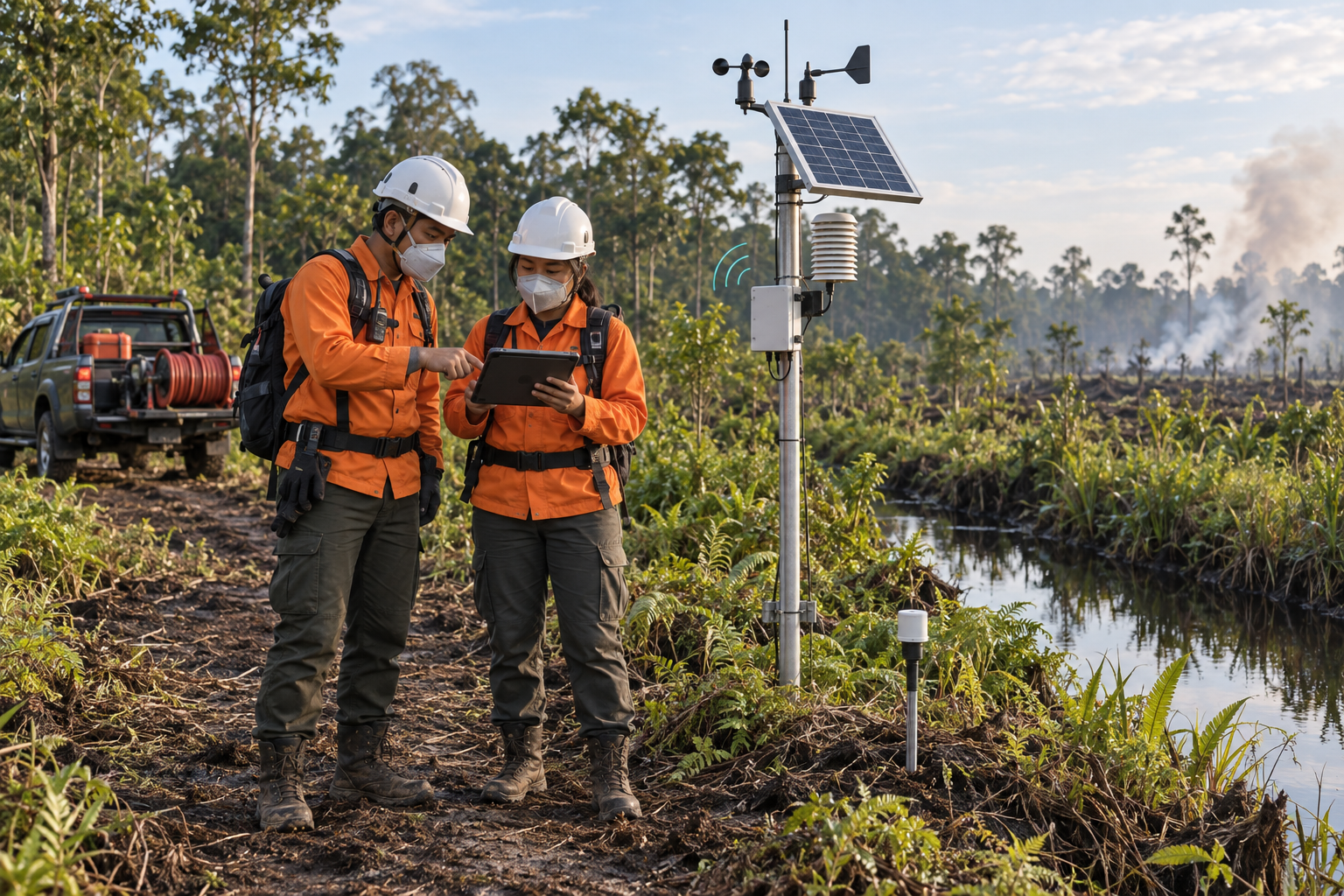
Illustrative forest and land fire monitoring at a peatland edge in Riau, Sumatra, with a field crew, environmental sensors, and distant smokeRiau · Sumatra
06Disaster monitoring and management

Forest and land fires (karhutla) motivate environmental sensing research. Priority-aware alerts could support response coordination. The setting remains prospective.

Illustrative application setting

Application horizons in the United Arab Emirates

Six research-aligned contexts for connected services.
Illustrative connected healthcare setting in Abu Dhabi with wearable monitoring and emergency telemetryAbu Dhabi
01Connected health

Priority-aware access for wearable monitoring and emergency telemetry

Illustrative application setting
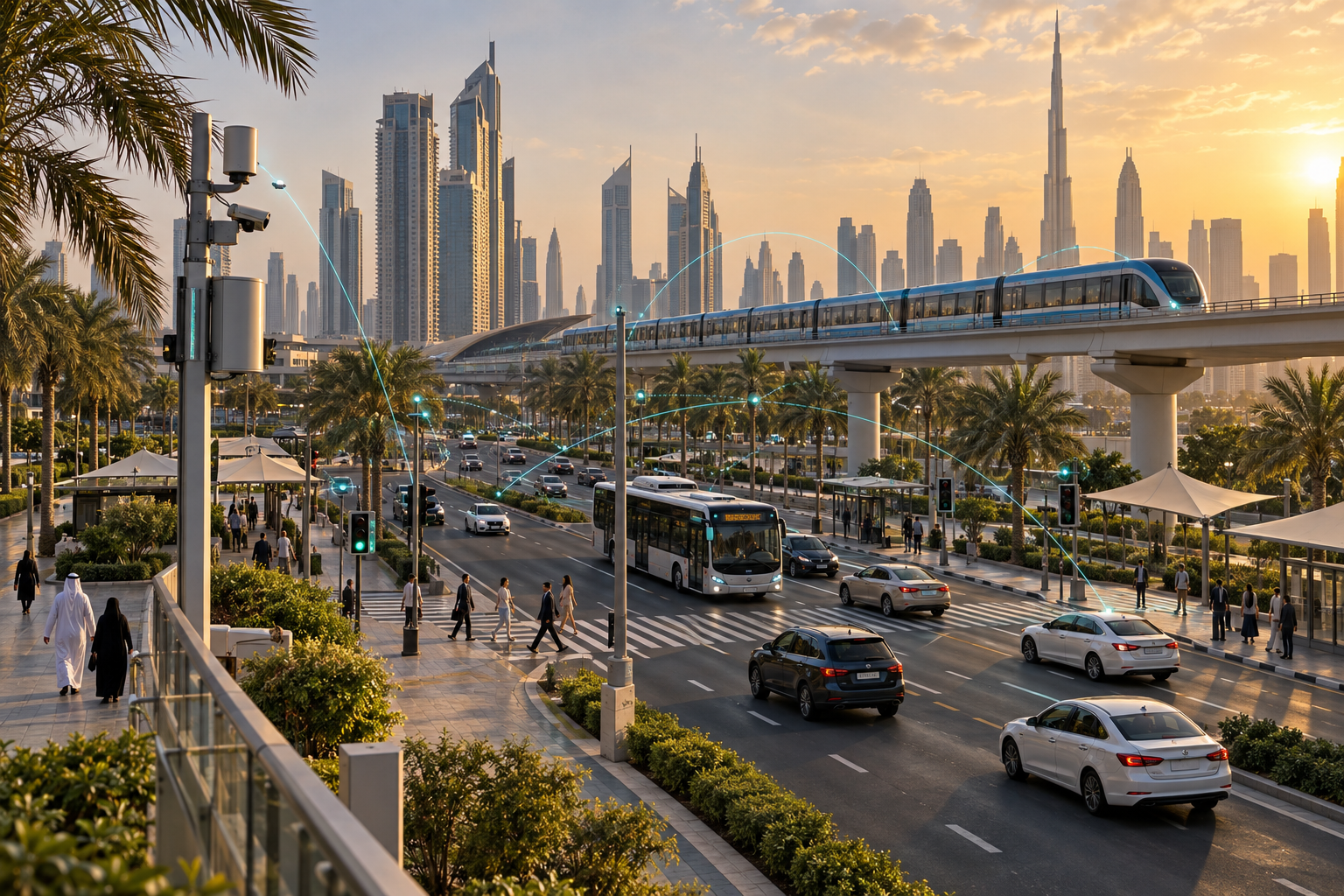
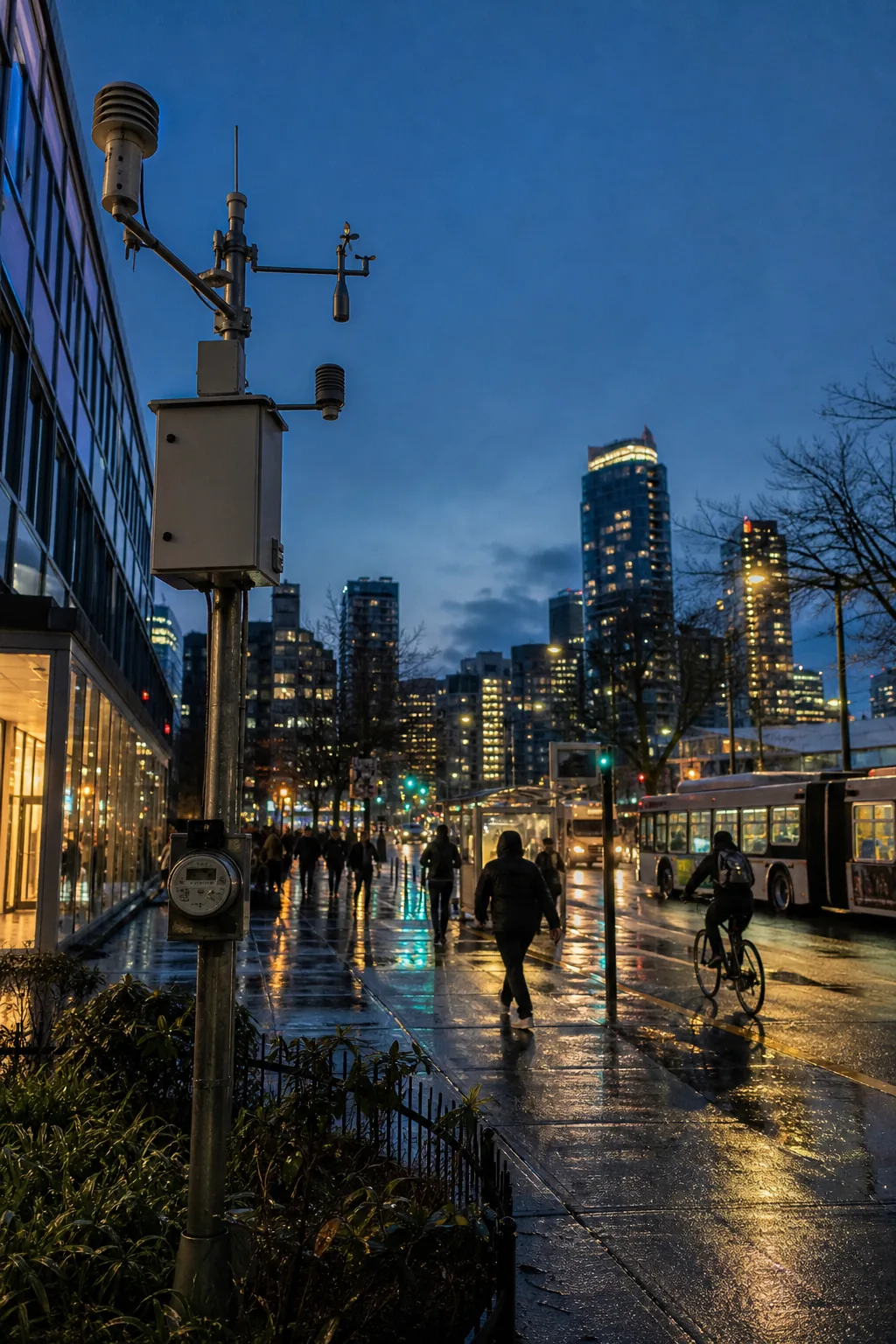
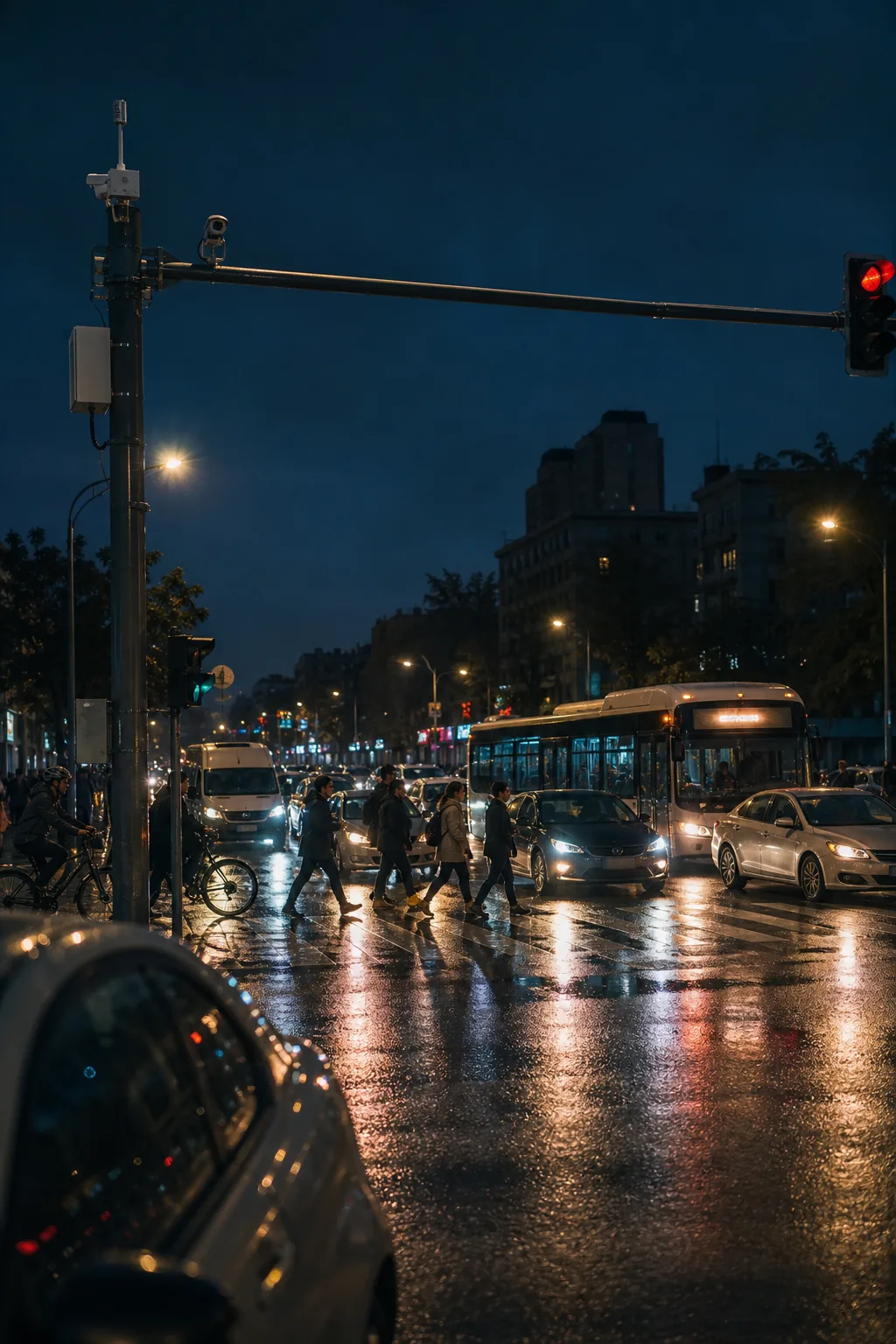
Illustrative Dubai mobility setting with connected vehicles, public transport, and roadside sensorsDubai
02Smart mobility

Dense uplink access for vehicles, transit, and roadside sensing

Illustrative application setting
Illustrative industrial setting at Khalifa Port in Abu Dhabi with sensor-connected logistics and machineryKhalifa Port · Abu Dhabi
03Ports and industry

Reliable sensor access for logistics, machinery, and distributed automation

Illustrative application setting
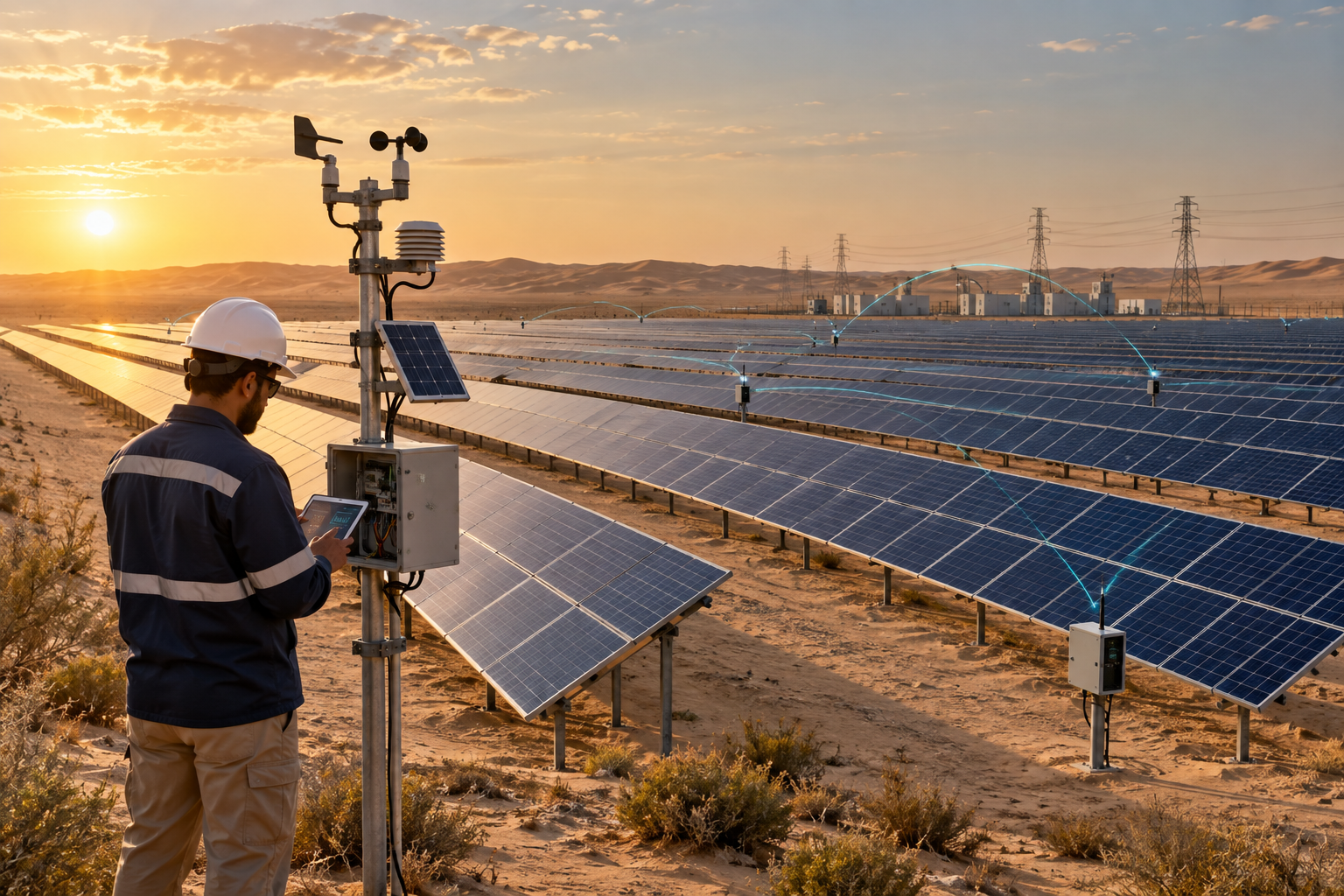
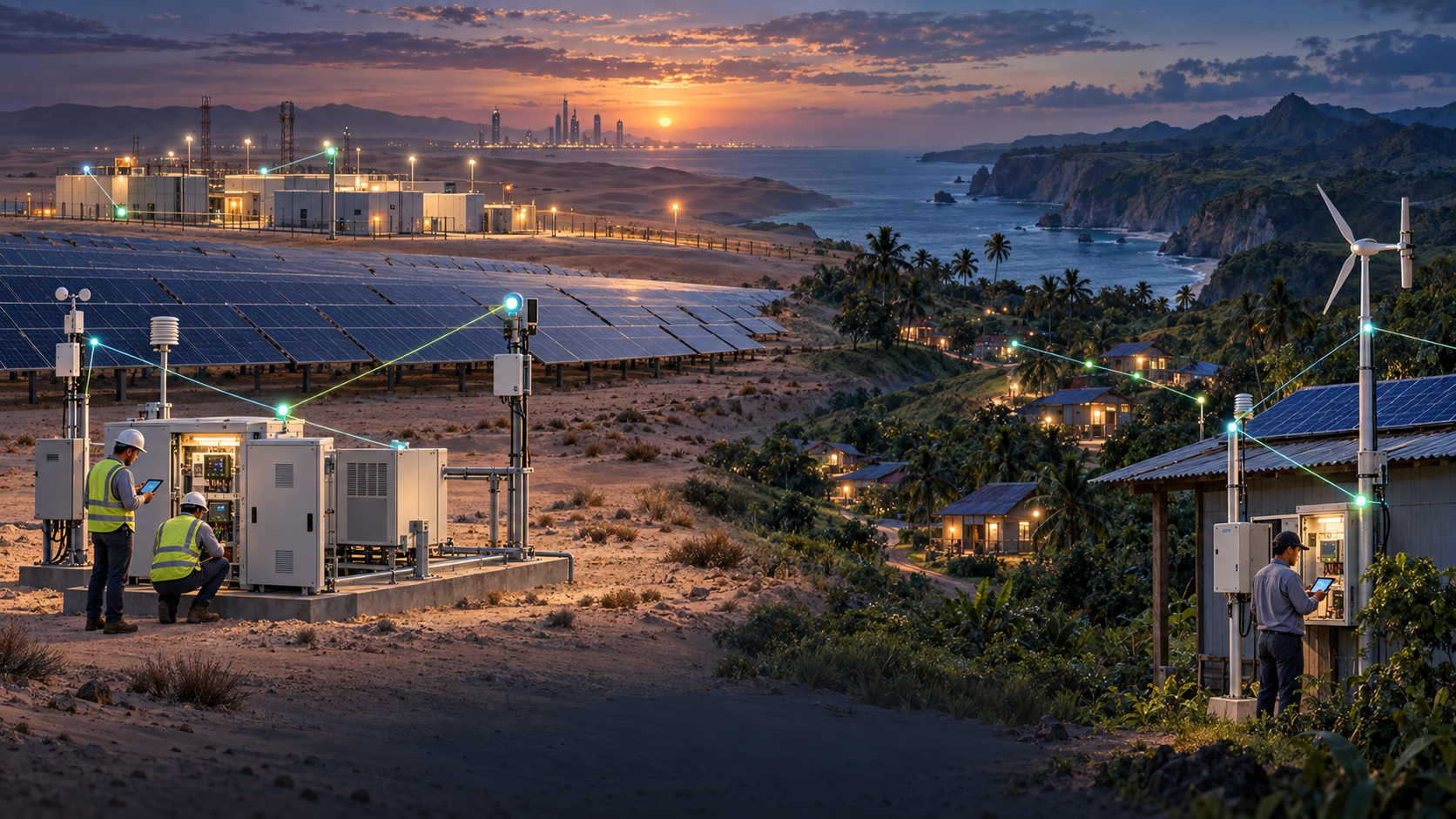
Illustrative solar energy setting in Al Dhafra, Abu Dhabi, with wireless monitoring of distributed infrastructureAl Dhafra · Abu Dhabi
04Energy and utilities

Low-overhead monitoring for solar generation and distributed infrastructure

Illustrative application setting
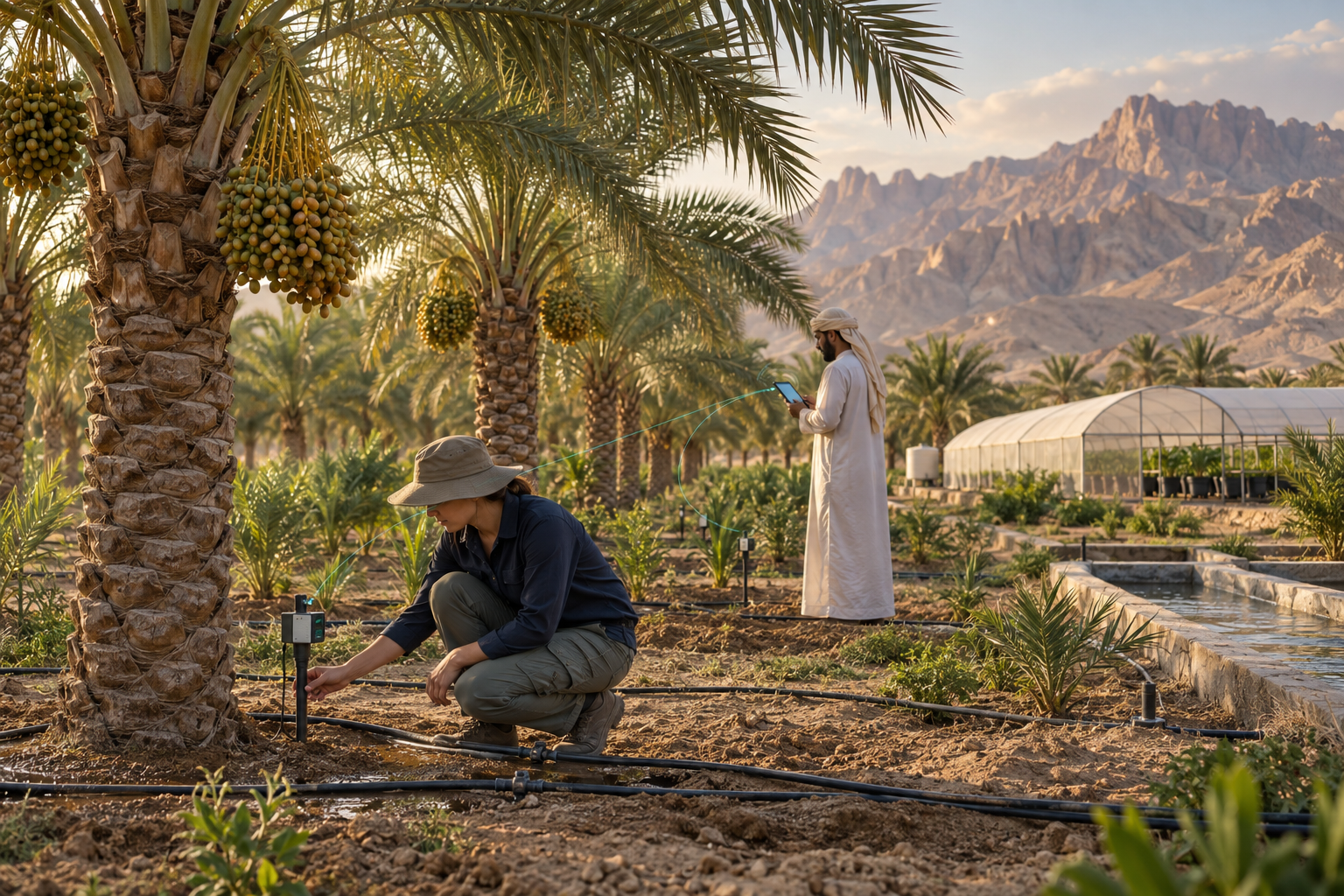
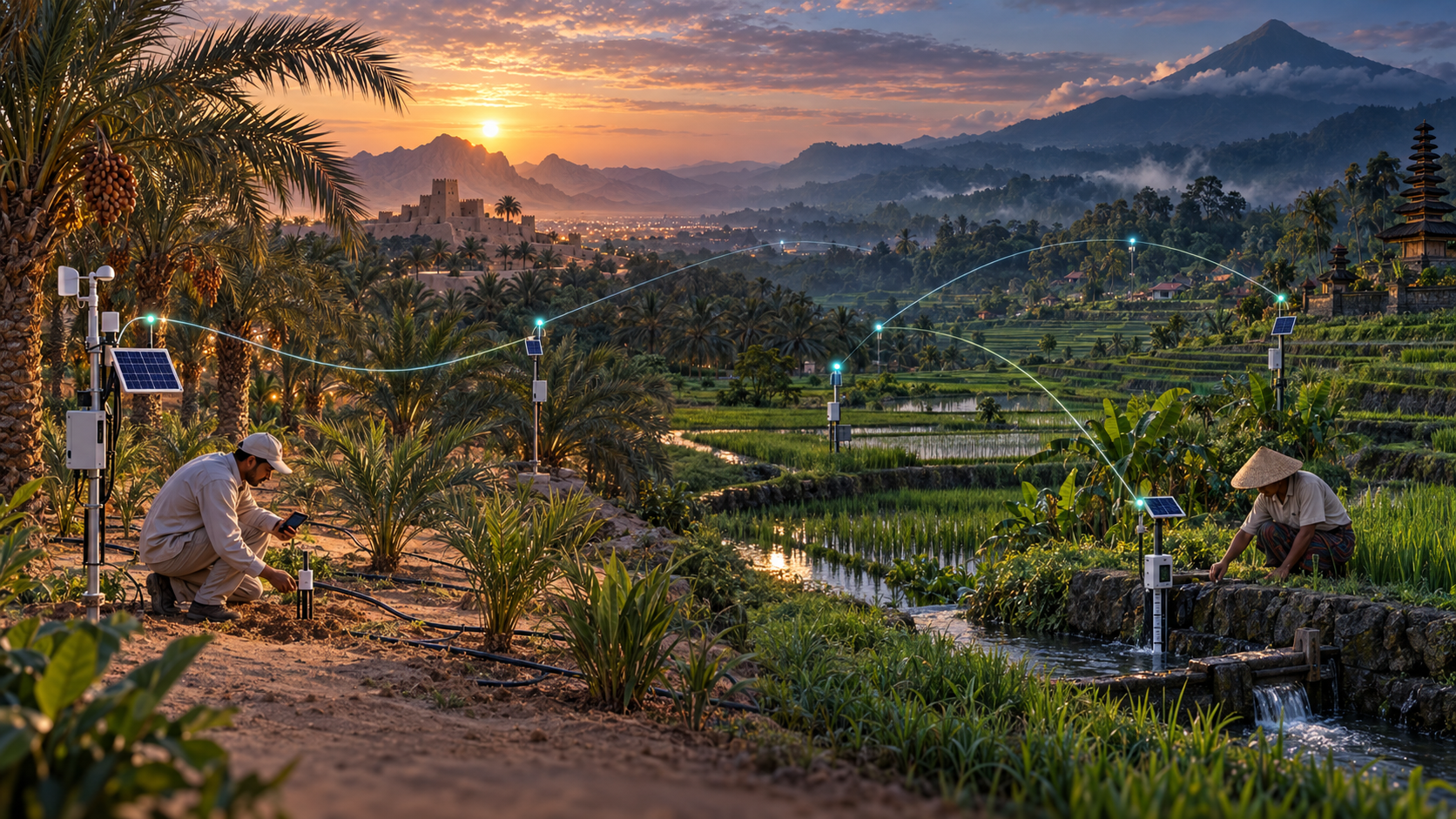
Illustrative agricultural setting in Al Ain, Abu Dhabi, with connected irrigation and crop sensorsAl Ain · Abu Dhabi
05Precision agriculture

Sparse sensing for irrigation, soil conditions, and crop monitoring

Illustrative application setting
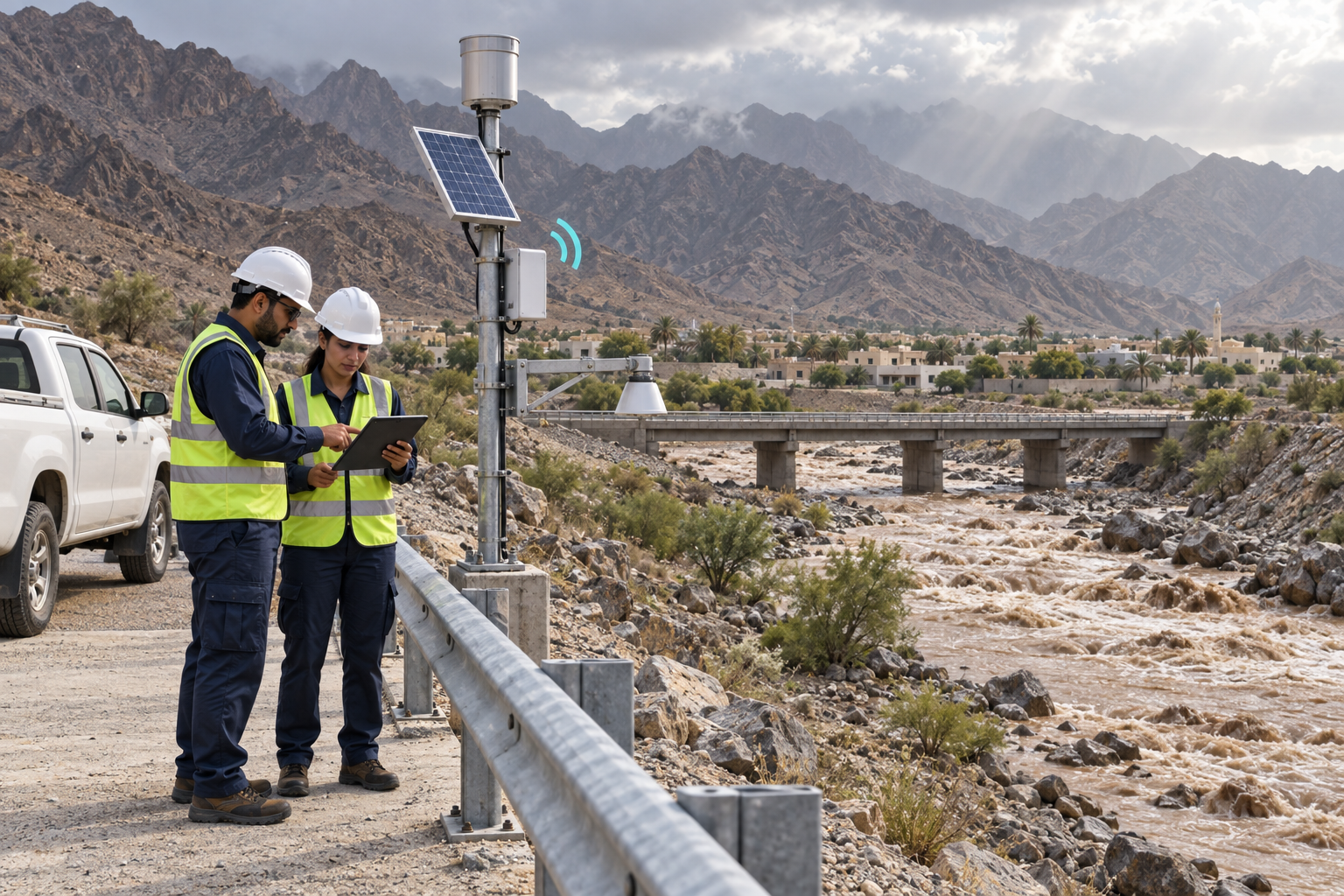
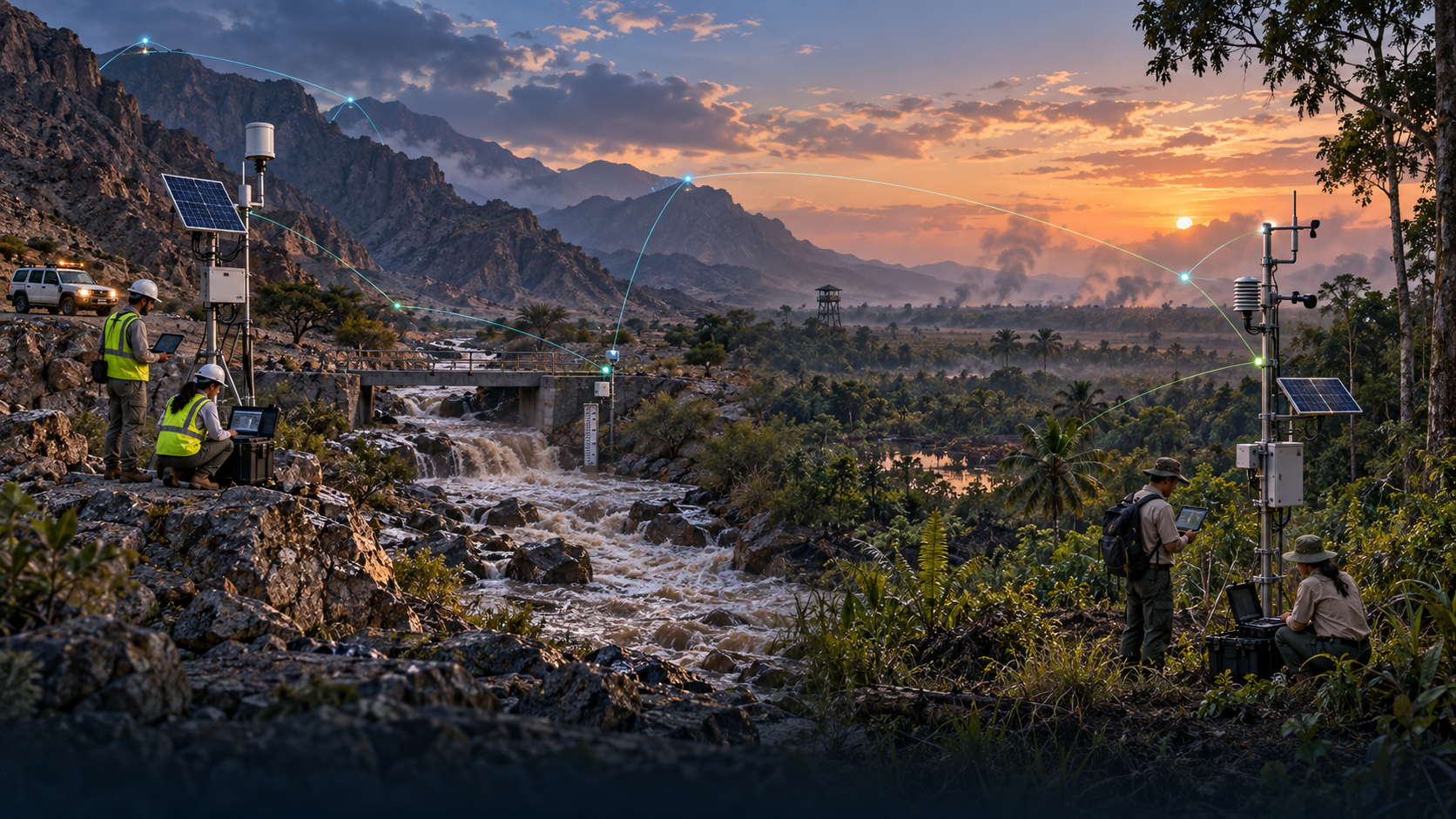
Prospective wadi flood monitoring in Fujairah's Hajar Mountains with water-level and rainfall sensors and a field teamFujairah · Hajar Mountains
06Disaster monitoring and management

Flash-flood monitoring motivates rainfall and water-level sensing research. Priority-aware alerts could support emergency coordination. The setting remains prospective.

Illustrative application setting

The locations shown are editorial application settings for research-aligned pathways. They do not claim joint deployment, institutional partnership, local adoption, or measured societal impact. Each setting remains a prospective illustration.

01Profile

Postdoctoral fellow / lecturer / IEEE Senior Member

Two roles. One research direction.

Dr. Ramatryana is a Postdoctoral Fellow at Khalifa University in Abu Dhabi and a Lecturer in Electrical Engineering at Universitas Nahdlatul Ulama Yogyakarta.

His work asks how future radio networks can support massive, heterogeneous traffic without giving up throughput, reliability, energy efficiency, or fair access.

His research spans wireless communications, signal processing, artificial intelligence, NextG random and multiple access, and NextG radio access networks. He received his Ph.D. in Wireless Communications from Kumoh National Institute of Technology in 2023 and became an IEEE Senior Member in 2025.

Current

Postdoctoral Fellow

Khalifa University · Abu Dhabi, UAE

Wireless and emerging network systems, including resilient grant-free transmissions.

Current

Lecturer, Electrical Engineering

Universitas Nahdlatul Ulama Yogyakarta · Indonesia

Teaching and research across wireless communications, signal processing, and intelligent systems.

2025–2026

Postdoctoral Researcher

Dublin City University · Ireland

NOMA-enabled radio-over-fiber fronthaul and resource allocation for cell-free massive MIMO.

2023–2024

Postdoctoral Researcher

FAU Erlangen–Nürnberg · Germany

Digital communications research, teaching support, and student supervision at the Institute for Digital Communications.

01Model
02Simulate
03Validate
02Research atlas

Where the work connects

Signals, access, intelligence.

From waveform and access-protocol design to fronthaul and network-wide resource allocation, the work connects physical-layer ideas with deployable system goals.

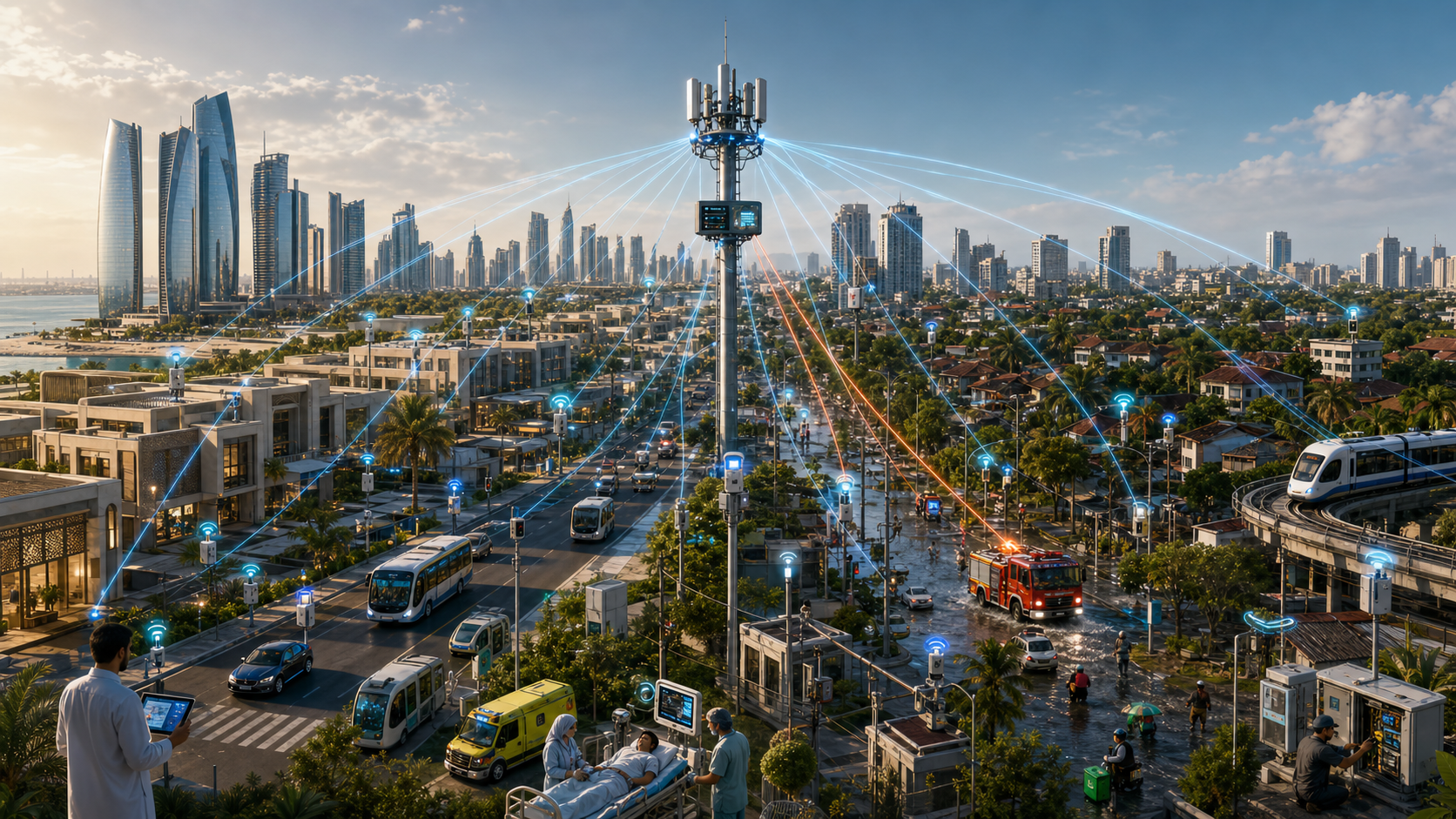
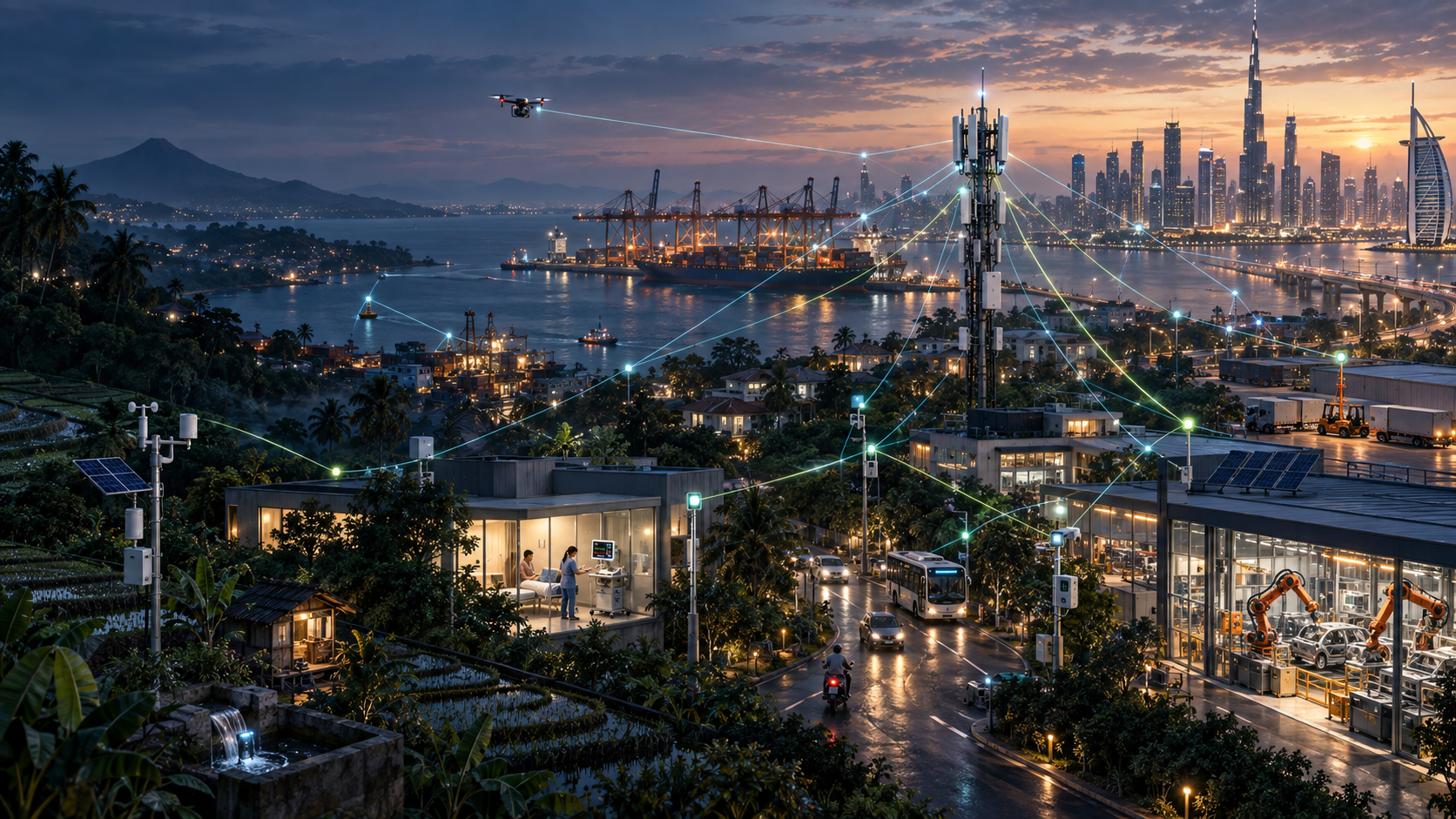
Realistic urban research panorama connecting UAE and Indonesian smart mobility, health, emergency, energy, utility, and environmental services through a coordinated macrocell
New research directionInitiated · 31 August 2026
UMa-MC · IMT-2030 Massive Communication

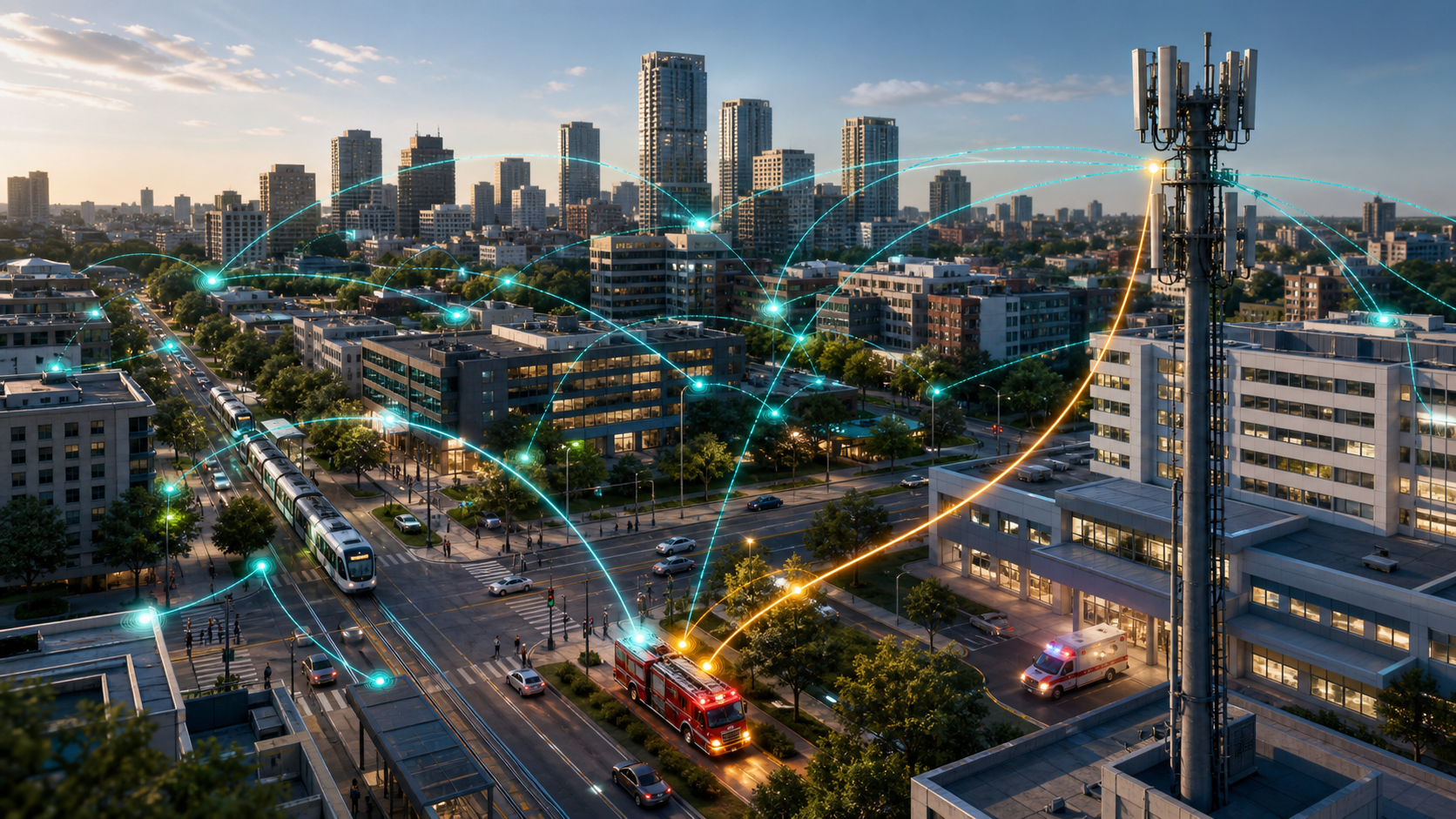
Urban access, coordinated for massive communication.

Urban services create dense, uneven, and time-sensitive access demands. UMa-MC studies coordinated urban macrocell access for those conditions. The concept connects communication theory with realistic UAE and Indonesia application settings.

UMa-MC research panoramaMassive access with differentiated service priorities.UAE · Indonesia

Research focus / 2026 to 2030

Assured, priority-aware, and freshness-aware urban access.

UMa-MC is a researcher-initiated concept, not an International Telecommunication Union designation. It focuses on event-burst massive access, differentiated priorities, information freshness, and macrocell coordination. The primary IMT-2030 lens is Massive Communication, with resilience and sustainability treated as cross-cutting design goals.

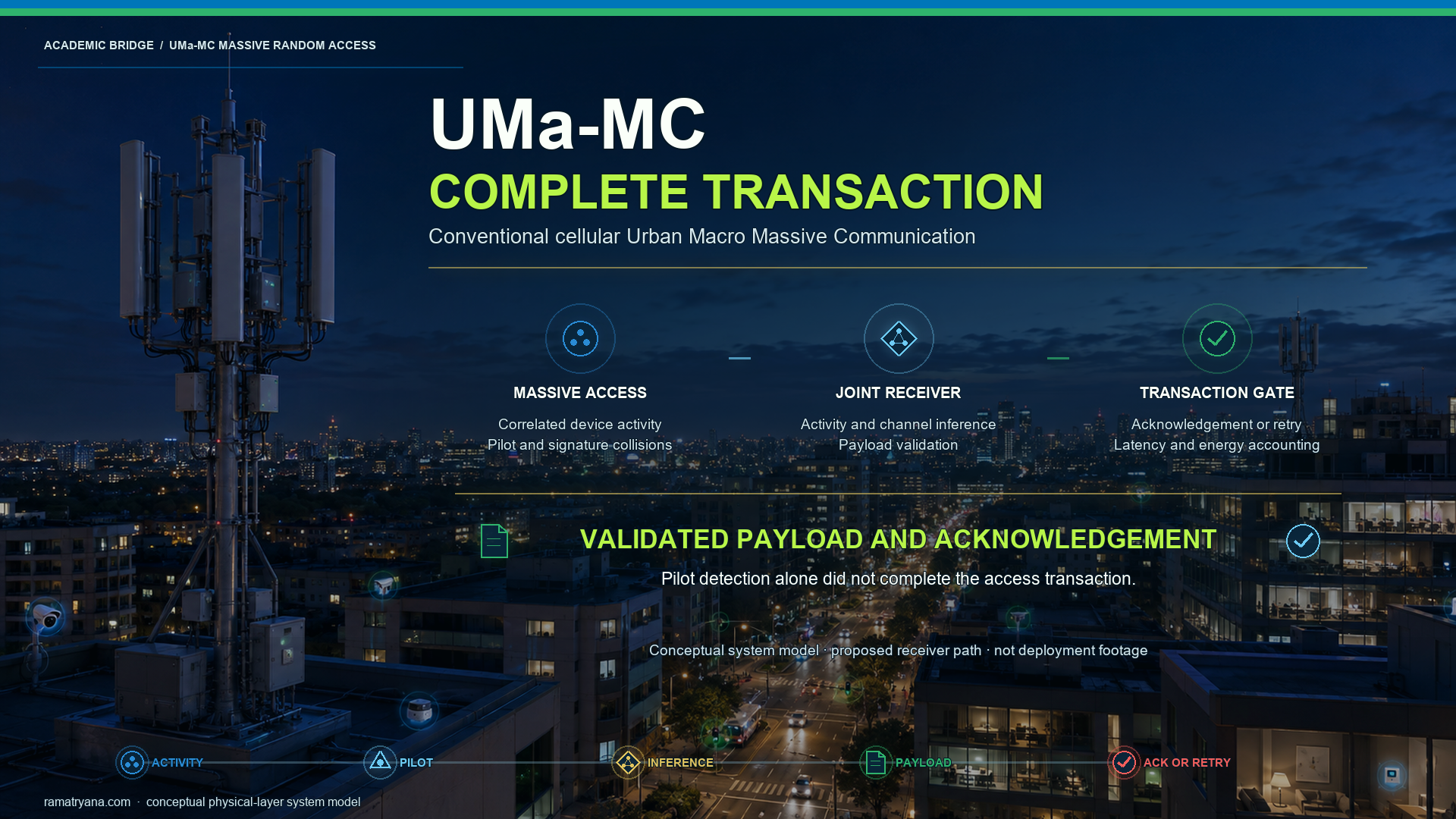
Poster for the UMa-MC massive random-access system-model animation
Loop animation / Physical-layer system modelMassive random access from activation to acknowledgement.

Conceptual receiver sequence for research communication. It does not represent deployment footage or measured field validation.

Project roadmap

A research path to 2030.

The roadmap moves from formal definition to contextual evaluation. Each stage keeps analytical, simulation, prototype, and deployment evidence separate. Progression depends on the evidence produced at the preceding stage.

  1. Wireless research framing workspace with urban device traffic and simulation layers
    System model and baselines
    · FrameDefine the problem

    Specify traffic classes, reliability and freshness objectives, urban scenarios, and reproducible access baselines.

  2. Priority-aware urban macrocell coordination across dense devices and critical services
    Priority-aware coordination
    · DesignCoordinate under pressure

    Develop priority-aware access, macrocell coordination, overload control, analytical bounds, and simulation comparisons.

  3. UAE and Indonesian urban digital-twin environments under mobility and resilience stress
    Dual-context stress testing
    · Stress-testModel both contexts

    Study UAE and Indonesia urban digital-twin scenarios across mobility, outages, energy limits, resilience, and event bursts.

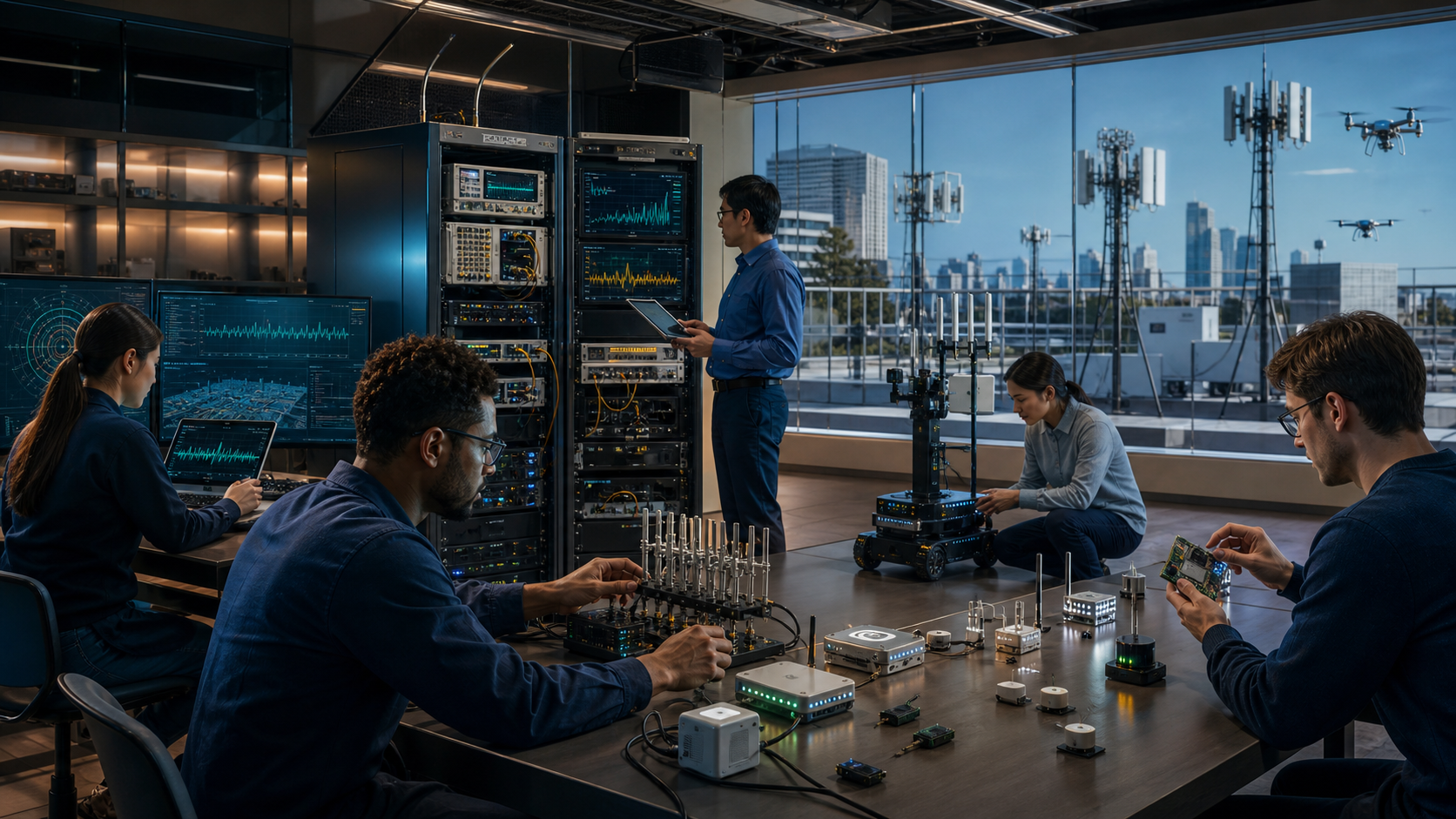
  4. Hardware-in-loop wireless testbed with instruments, antenna arrays, and radio racks
    Hardware-in-loop evaluation
    · EvaluateMove toward a testbed

    Build a testbed or hardware-in-loop path when resources allow, then compare selected results with relevant ITU evaluation criteria.

  5. Integrated urban research demonstrator connecting mobility, health, energy, and environmental services
    Integrated research demonstrator
    · IntegrateRelease usable guidance

    Assemble an integrated demonstrator, publish scenario-specific design guidance, and share methods or data where permitted.
Official IMT-2030 context

ITU candidate radio-interface submissions begin in February 2027 and close in February 2029. Independent evaluation follows that submission window. These milestones frame the project schedule without implying standardization or adoption.

This roadmap states planned research activities. It does not claim ITU adoption, operational deployment, interoperability, or measured societal impact. The panorama presents illustrative application settings rather than verified field deployments.

Artistic real-world landscape illustrating connected health, industrial sensing, environmental monitoring, and shared wireless access
Universitas Nahdlatul Ulama Yogyakarta logo
QPRA-QNOMA-ALOHA / UNU Yogyakarta

Priority where access gets crowded.

Urgent updates. Routine sensing. Shared radio resources.

QPRA-QNOMA-ALOHA research featurePriority-aware random access for heterogeneous connected devices.Illustrative application study
Research illustration / 2026IEEE Internet of Things Journal

QPRA-QNOMA-ALOHA / IEEE Internet of Things Journal / 2026

Different traffic. Shared radio resources.

Quadrature priority random access (QPRA) combines quadrature non-orthogonal multiple access (QNOMA) with slotted ALOHA. The published framework includes finite-user collision analysis and adaptive power-group allocation. Enhanced user barring links admission decisions to transmit power and spatial fairness.

Each admitted device selects one in-phase (I) or quadrature (Q) branch within the same physical slot. Phase precompensation supports branch separation. Priority classes select different power groups, while either class can use either branch. Successive interference cancellation (SIC) proceeds from high to low power separately within each branch.

Ramatryana's affiliation in the paperUniversitas Nahdlatul Ulama Yogyakarta
Read the published paper

Source basis: Accepted author manuscript.

Quadrature NOMA-Based Priority Random Access in Heterogeneous Massive IoT

Conceptual access flowAutomatic loop
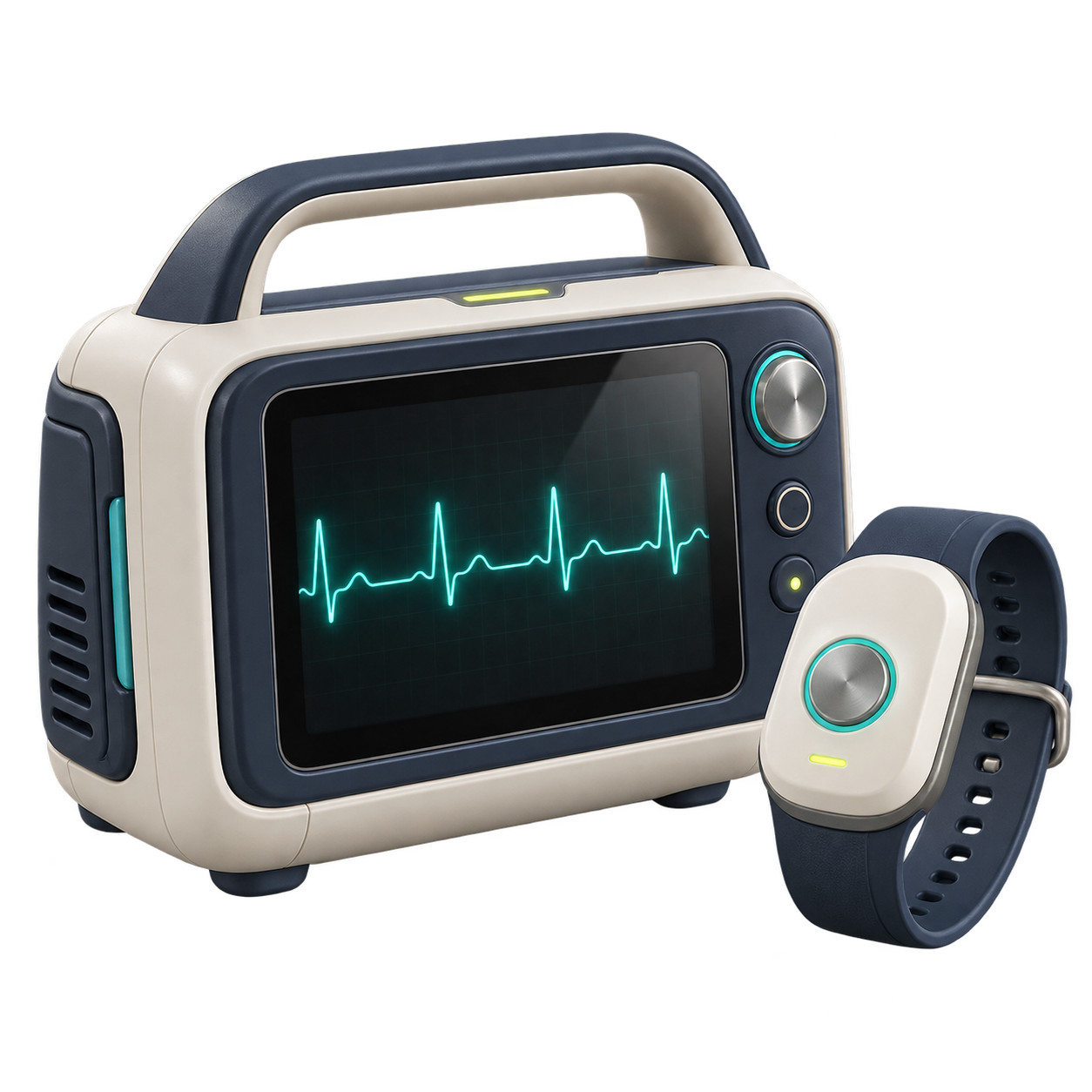
Artistic illustration of a portable health monitor and connected wearable
Connected health
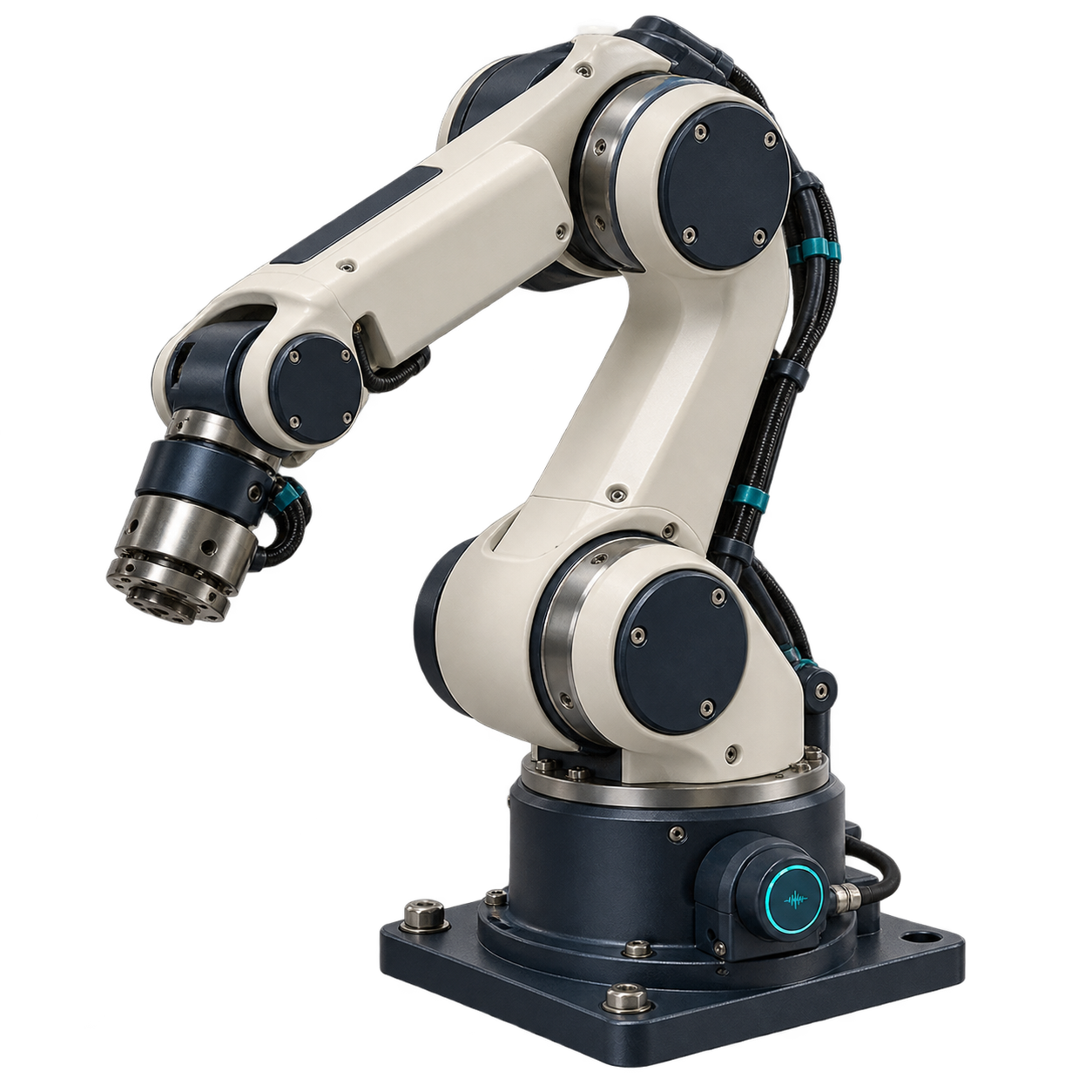
Artistic illustration of an industrial robot arm and machine sensor
Industrial sensing
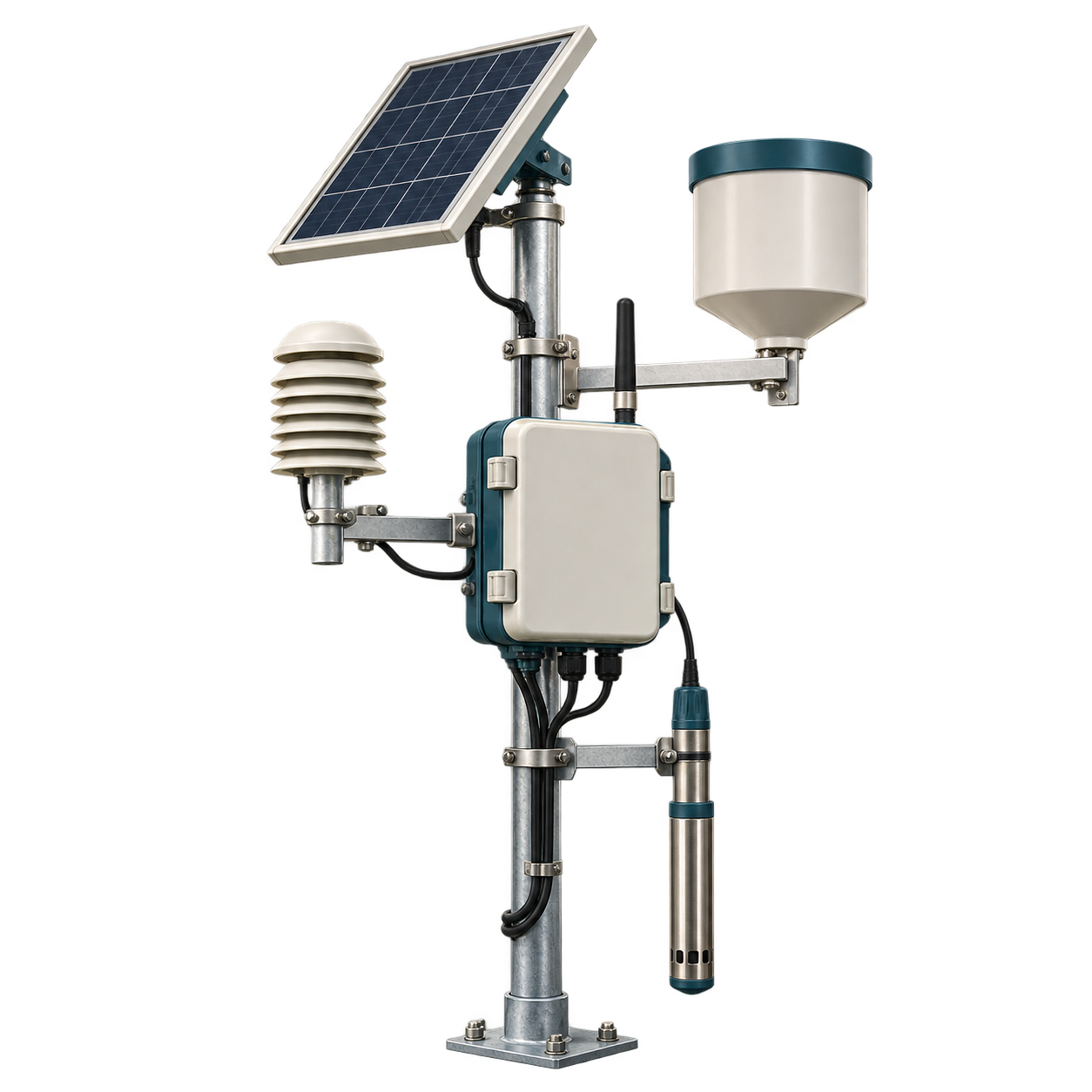
Artistic illustration of a solar-powered environmental sensor station
Environmental sensing
01 / AdmissionPriority admission

Urgent and routine traffic enter the access process.

Urgent trafficRoutine traffic
02 / Transmission choiceSlot · branch · power selection

Each device chooses one branch. Priority determines power groups, not the reception branch.

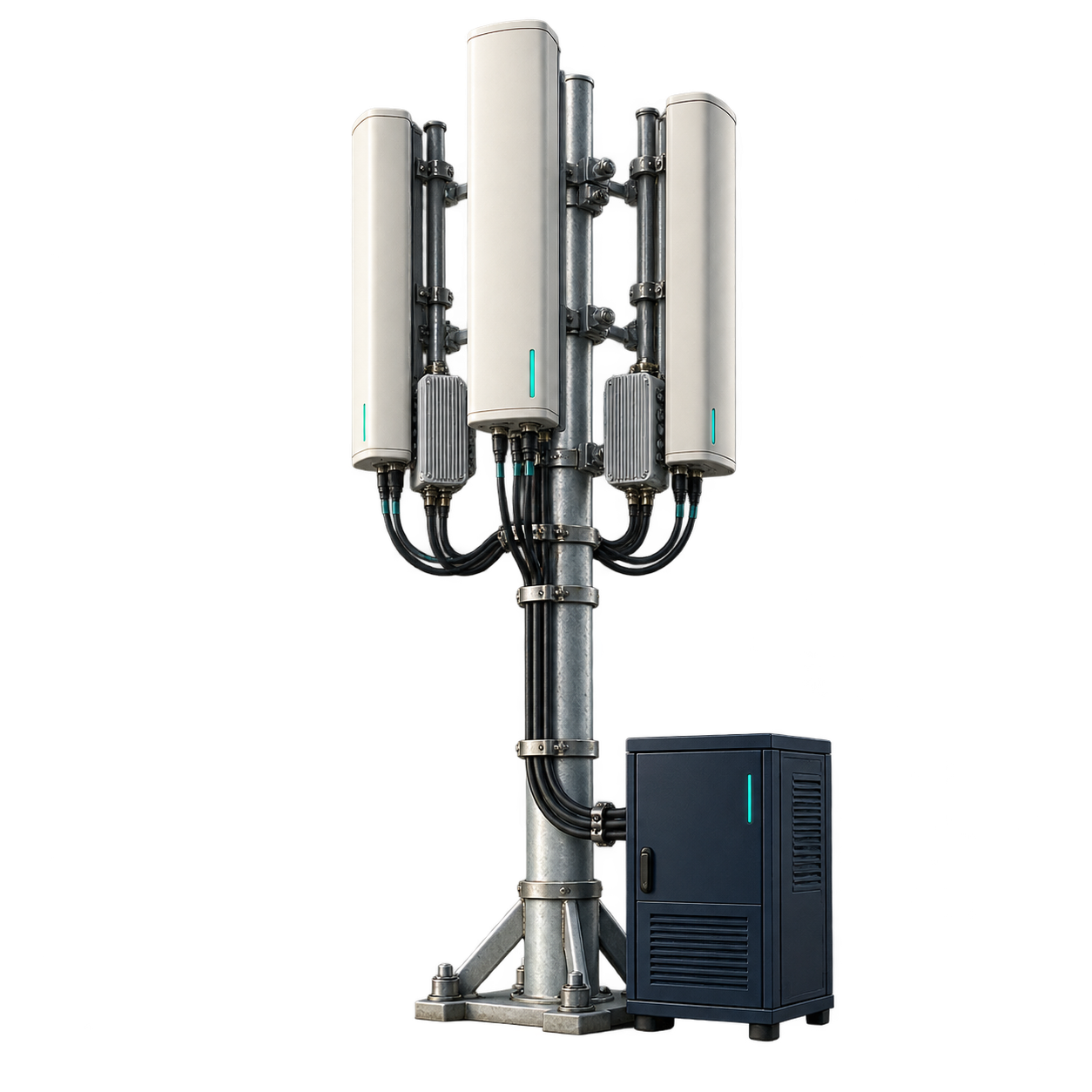
Artistic illustration of one cellular base station with a radio cabinetOne base station Two signal branches
03 / Reception
In-phase branch
UrgentRoutine
04 / DecodingSeparate SICWithin the I branch
03 / Reception
Quadrature branch
UrgentRoutine
04 / DecodingSeparate SICWithin the Q branch
Conceptual signal flow, not a transmitted waveform or measurement. Both branches contain both priority classes. Successive interference cancellation operates separately within each branch.

The published evidence

Results with a defined scope.

Aggregate throughput / Fig. 172.117

vs 1.789 packets per slot

At four devices per slot, QPRA exceeded the single-branch, eight-level baseline in the collision-event simulation. Both provided eight branch-power contention choices. Aggregate throughput does not establish higher efficiency per dimension.

Per-dimension counterpoint / Fig. 171.059

vs 1.789 bit/use/dimension

Normalizing the same operating point by branch dimensions reverses the comparison. The proposed scheme uses two branches, while the baseline uses one. The published gain is not a universal spectral-efficiency gain.

High-priority mean delay / Fig. 1225.40

vs 44.52 frames

With 2,400 devices activated over 60 frames, adaptive QPRA with enhanced user barring reduced mean delay against single-branch priority access with the same barring. The experiment included burst arrivals, backlog, and retransmissions. Results describe simulated access delays, not measured service response.

A faster comparison / Fig. 1212.96

frames with 16 orthogonal preambles per slot

The resource-matched preamble-based priority scheme achieved a lower high-priority mean delay in the same experiment. Adaptive QPRA with conventional barring achieved 14.70 frames. Access resources and admission policy both matter.

The reported model uses synchronized single-cell access, phase precompensation, uncoded packet-threshold simulations, and feasible channel inversion. Channel coding, hardware validation, multicell operation, and peak-power constraints remain future work. Secrecy performance is not validated by the paper.

From the paper to 2030

A foundation for the next research questions.

The researcher-initiated urban macrocell massive communication (UMa-MC) concept provides a longer research context. Each year below connects the published access model with a proposed extension. Planned activities are not results already demonstrated by the paper.

  1. 2026Frame
    Establish the access baseline

    Use the published two-class model, finite-user analysis, and normalized comparisons as starting points. Define urban traffic and service objectives separately. The paper does not validate an urban macrocell implementation.

    Explore 2026 roadmap
  2. 2027Design
    Connect priority to coordination

    Investigate adaptive power groups, class-specific barring, and feasible controller updates within coordinated urban access. The paper supports the access-control building blocks. Macrocell coordination remains a proposed extension.

    Explore 2027 roadmap
  3. 2028Stress-test
    Challenge both regional contexts

    Build on the reported burst-load, phase-leakage, cancellation, and channel-error studies. Extend evaluation toward mobility, outages, peak-power limits, and multi-cell interference. Regional scenarios require new traffic and propagation models.

    Explore 2028 roadmap
  4. 2029Evaluate
    Test beyond the simulation

    Investigate a testbed with synchronization, channel estimation, coded packets, and calibrated power measurements. Compare observed delay and reliability with the analytical baseline. Hardware work depends on resources and successful earlier evaluation.

    Explore 2029 roadmap
  5. 2030Integrate
    Publish bounded design guidance

    Combine validated access components into a research demonstrator. Report scenario-specific operating limits, service trade-offs, and reproducible evidence. Integration does not imply standards adoption or guaranteed critical-service performance.

    Explore 2030 roadmap

Two regional contexts / Six application types

Different places. Shared access questions.

Urgent updates and routine sensing can compete for the same radio resources. The regional scenes connect that access question with possible services. They illustrate research directions, not deployed systems or measured local impact.

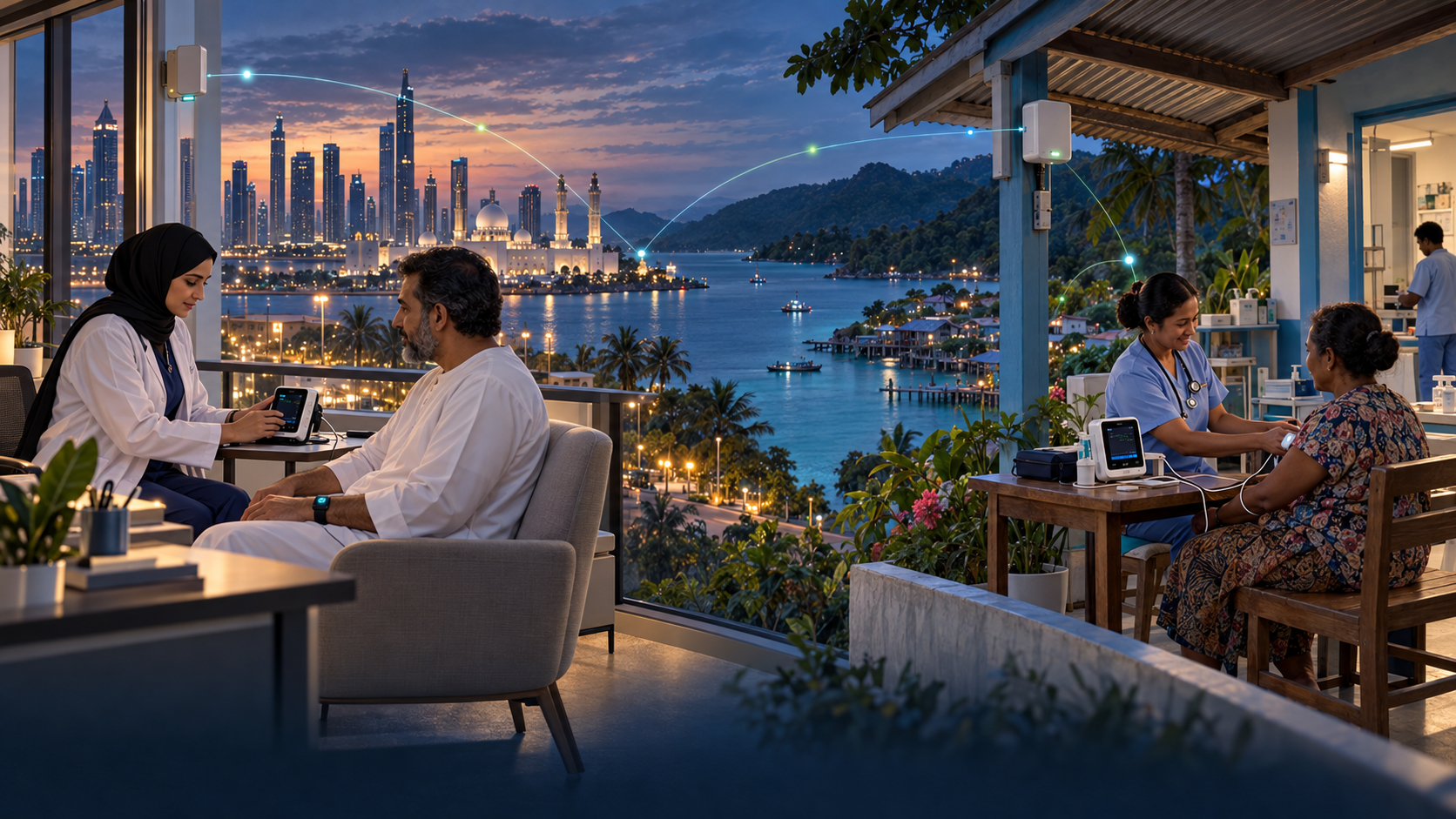
Conceptual connected-health illustration combining an Abu Dhabi care setting with remote monitoring in the Kei Islands of Indonesia
Application study / 01UAE + Indonesia
Health
Urgent traffic
Health-event notifications
Routine traffic
Periodic wearable and monitoring reports
Research connection

Study differentiated access when health-event reports compete with routine monitoring packets. The research question concerns communication access. Clinical safety and diagnostic performance need separate validation.

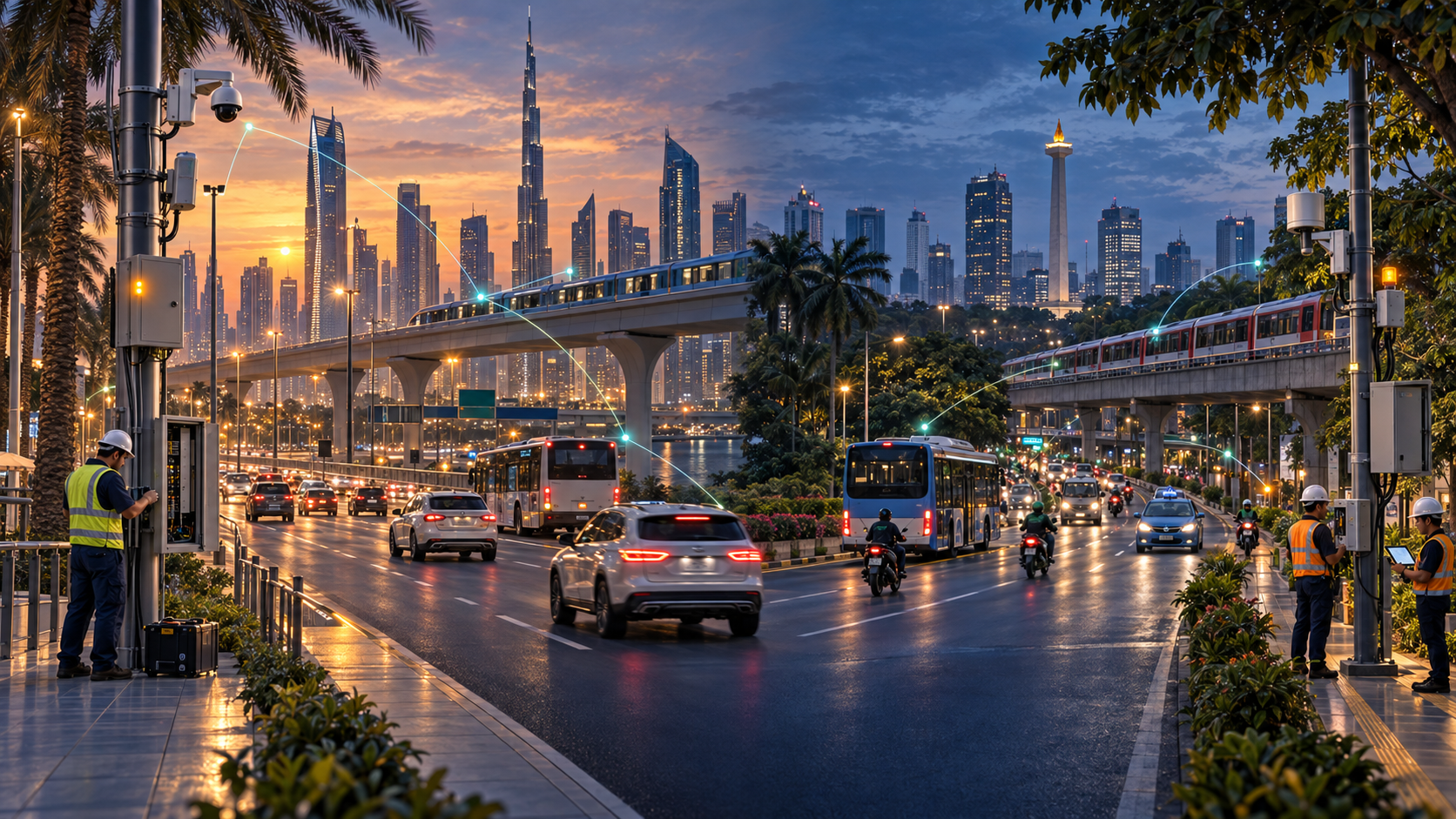
Conceptual mobility illustration combining connected transport and roadside sensing in Dubai and Jakarta
Application study / 02UAE + Indonesia
Mobility
Urgent traffic
Roadside incident notifications
Routine traffic
Vehicle status and transport updates
Research connection

Explore priority access for incident messages during dense transport activity. Delay and delivery probability would need scenario-specific evaluation. The paper does not establish collision-avoidance or autonomous-driving guarantees.

Conceptual industrial sensing illustration combining port logistics in Abu Dhabi with connected manufacturing in Batam
Application study / 03UAE + Indonesia
Industry and logistics
Urgent traffic
Equipment fault and condition alarms
Routine traffic
Machinery status and cargo telemetry
Research connection

Investigate access differentiation when equipment alarms arrive with routine industrial reports. Compare burst handling and retransmission delay under matched resources. Industrial safety certification remains outside the published study.

Conceptual energy-monitoring illustration combining solar infrastructure in Al Dhafra with renewable energy systems in Sumba
Application study / 04UAE + Indonesia
Energy and utilities
Urgent traffic
Infrastructure fault notifications
Routine traffic
Generation and equipment telemetry
Research connection

Study fault-report access alongside periodic energy-system measurements. Assess admission, delay, and power trade-offs for the chosen deployment model. The paper does not validate grid protection or measured energy savings.

Conceptual agricultural sensing illustration combining irrigated farming in Al Ain with the rice terraces of Jatiluwih in Bali
Application study / 05UAE + Indonesia
Agriculture
Urgent traffic
Irrigation and environmental threshold events
Routine traffic
Soil, water, and crop sensor reports
Research connection

Explore priority for threshold events during routine field sensing. Evaluate access under sparse coverage and device power constraints. Water savings and crop-yield improvements are not established by the paper.

Conceptual disaster-monitoring illustration combining rainfall and rising-water sensing in Fujairah with smoke and heat monitoring for karhutla in Riau
Application study / 06UAE + Indonesia
Disaster monitoring and management
Urgent traffic
Karhutla indicators and rising-water alerts
Routine traffic
Periodic weather and environmental readings
Research connection

Investigate smoke and heat alerts in Riau, and rainfall and water-level alerts in Fujairah. Study access contention when many sensors report together. Hazard prediction and guaranteed emergency delivery require separate evidence.

The paper reports analysis and simulation. Roadmap links and regional scenarios are prospective extensions, not field deployments, guaranteed emergency performance, or standards adoption. No institutional partnership is implied.

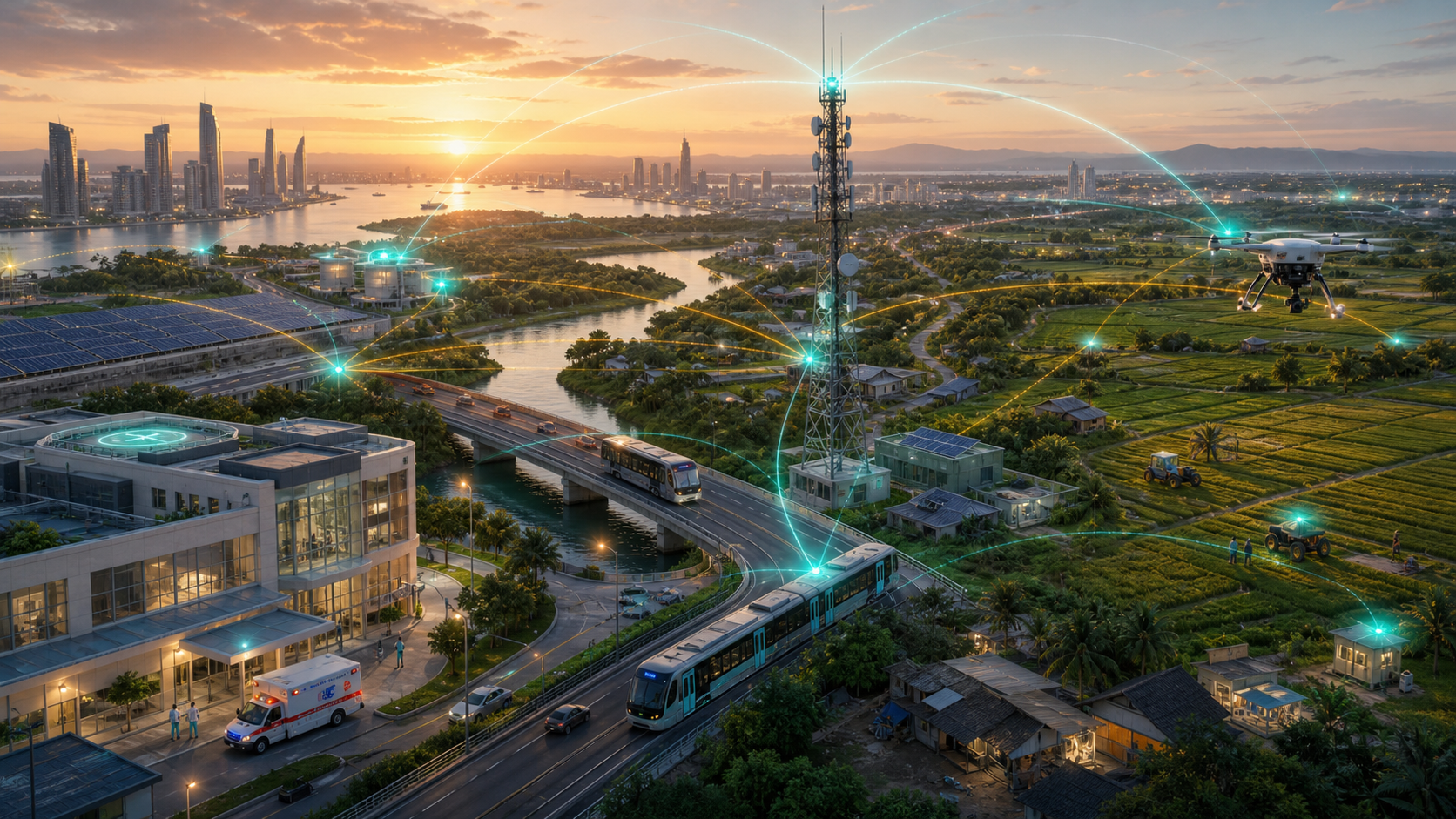
Dense artistic wireless landscape connecting mobility, industry, health, renewable energy, agriculture, drones, and distributed access
Universitas Nahdlatul Ulama Yogyakarta logo
FT-IMMA / UNU Yogyakarta

When where and when become part of the message.

Frequency index × time index + constellation symbol

FT-IMMA research featureResilient grant-free access for dense connected systems.Wireless access study
Research illustration / 2025IEEE TVT · IMT-2030 lens

FT-IMMA × IMT-2030

Frequency, time, and symbol carry the message.

FT-IMMA uses frequency indices, time indices, and conventional constellation symbols to carry information in a grant-free uplink. Viewed through the ITU's IMT-2030 Massive Communication scenario, the method explores richer sharing of frequency-time resources across dense device populations.

Based on research by Muhammad Sajid Sarwar, I Nyoman Apraz Ramatryana, Gelar Budiman, and Soo Young Shin, published in IEEE Transactions on Vehicular Technology, vol. 74, no. 5, pp. 7866–7880.

How the message expands

01 / WhereFrequency index

The selected frequency position carries information.

02 / WhenTime index

The selected transmission interval adds another information dimension.

03 / SymbolConstellation symbol

The conventional modulation symbol carries the remaining payload.

These scenes illustrate possible research directions. FT-IMMA is a research proposal, not an adopted IMT-2030 standard or a field-validated 6G deployment.

Artistic smart-city scene with dense environmental and infrastructure sensing
01 / Smart city sensingA city that listens in millions.

Air, energy, and street systems producing short uplink updates.

Realistic connected factory with robots, machinery, and wireless sensing
02 / Adaptive industryMachines speak in bursts.

Robots, safety sensors, and maintenance systems sharing dense status data.

Cinematic connected-road scene with vehicles and roadside infrastructure
03 / Connected mobilityEvery moving node leaves a signal.

Vehicles, chargers, and roadside units creating irregular uplink bursts.

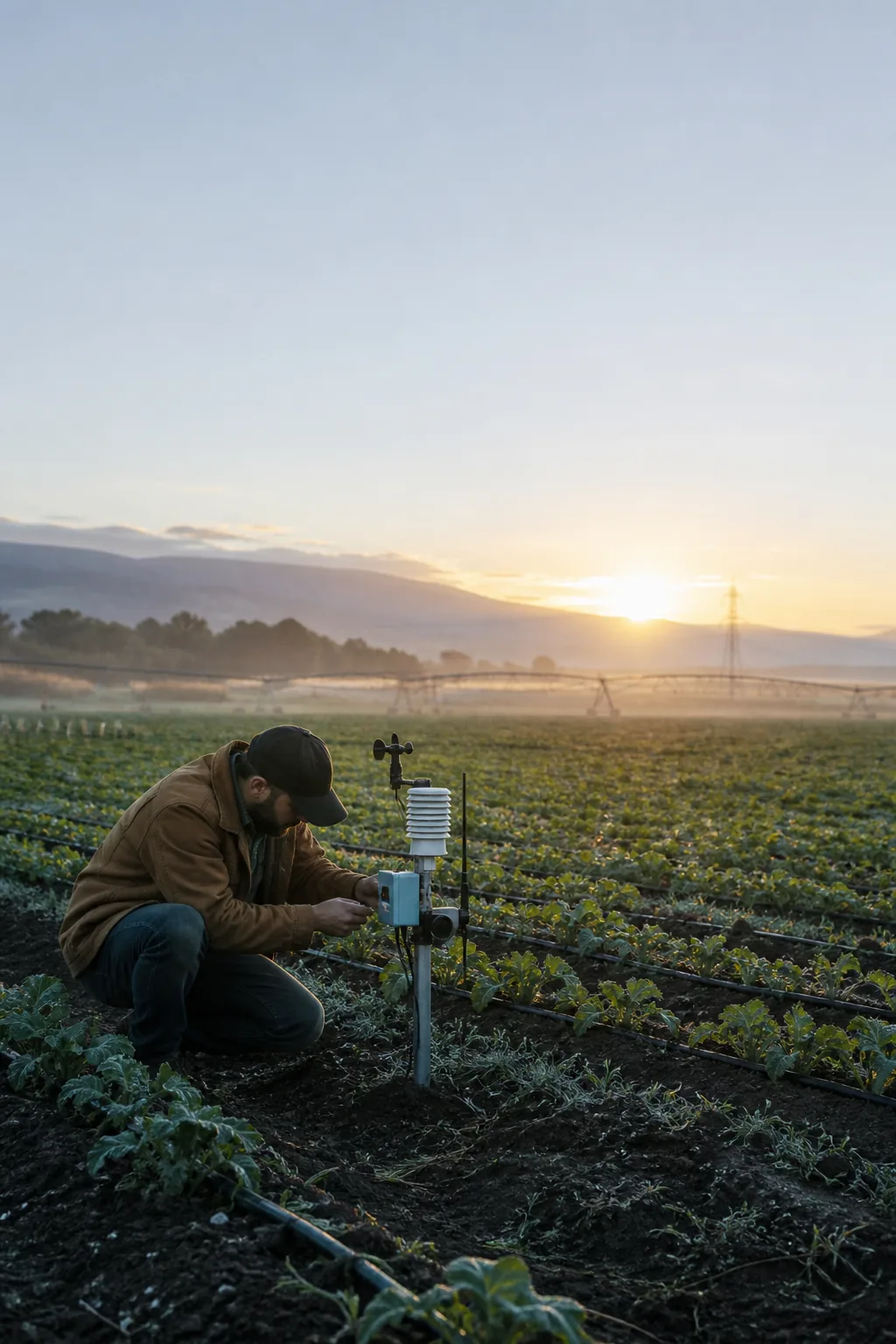
Artistic precision-agriculture scene with a farmer and connected field sensor
04 / Precision agricultureA field becomes a living network.

Distributed soil, water, and crop sensors reporting across wide areas.

Real-world 6G applications connected through distributed antennas: an autonomous car, factory robots, a sensing drone, a healthcare wearable, and smart-energy infrastructure
Live application map
  • Remote healthWearable monitoring
  • Connected mobilityVehicle and roadside coordination
  • Adaptive industryRobotics and machine sensing
  • Smart energyDistributed grid awareness
  • Aerial sensingWide-area observation
Visual study 01One network fabric for mobility, industry, health, energy, and sensing.

Animated editorial application map

01

Massive Random Access for Future IoT

Cross-layer random-access design for dense machine-type networks, including adaptive traffic load, prioritized access, and throughput analysis.

  • Massive IoT
  • Random access
  • Traffic-load adaptation
02

RSMA, NOMA & 6G Multiple Access

Rate-splitting and non-orthogonal multiple-access methods for overloaded uplinks, spanning slotted ALOHA, coded access, and vortex-wave communications.

  • RSMA
  • NOMA
  • Slotted ALOHA
03

NextG RAN, Cell-Free MIMO & RoF

Next-generation radio access and radio-over-fiber fronthaul for distributed cell-free massive MIMO, including low-complexity radio and optical resource allocation.

  • NextG RAN
  • CF mMIMO
  • Radio-over-fiber
04

Wireless Signal & Image Processing

Sparse reconstruction and compressive sensing for communications and medical imaging, alongside modulation and signal-space designs for efficient transmission.

  • Compressive sensing
  • Medical imaging
  • Signal processing
05Current research

Secure & Resilient Grant-Free Access

Jamming-resilient grant-free transmission and secure IoT connectivity for networks that must remain dependable under contention and interference.

  • Grant-free access
  • Anti-jamming
  • Secure IoT
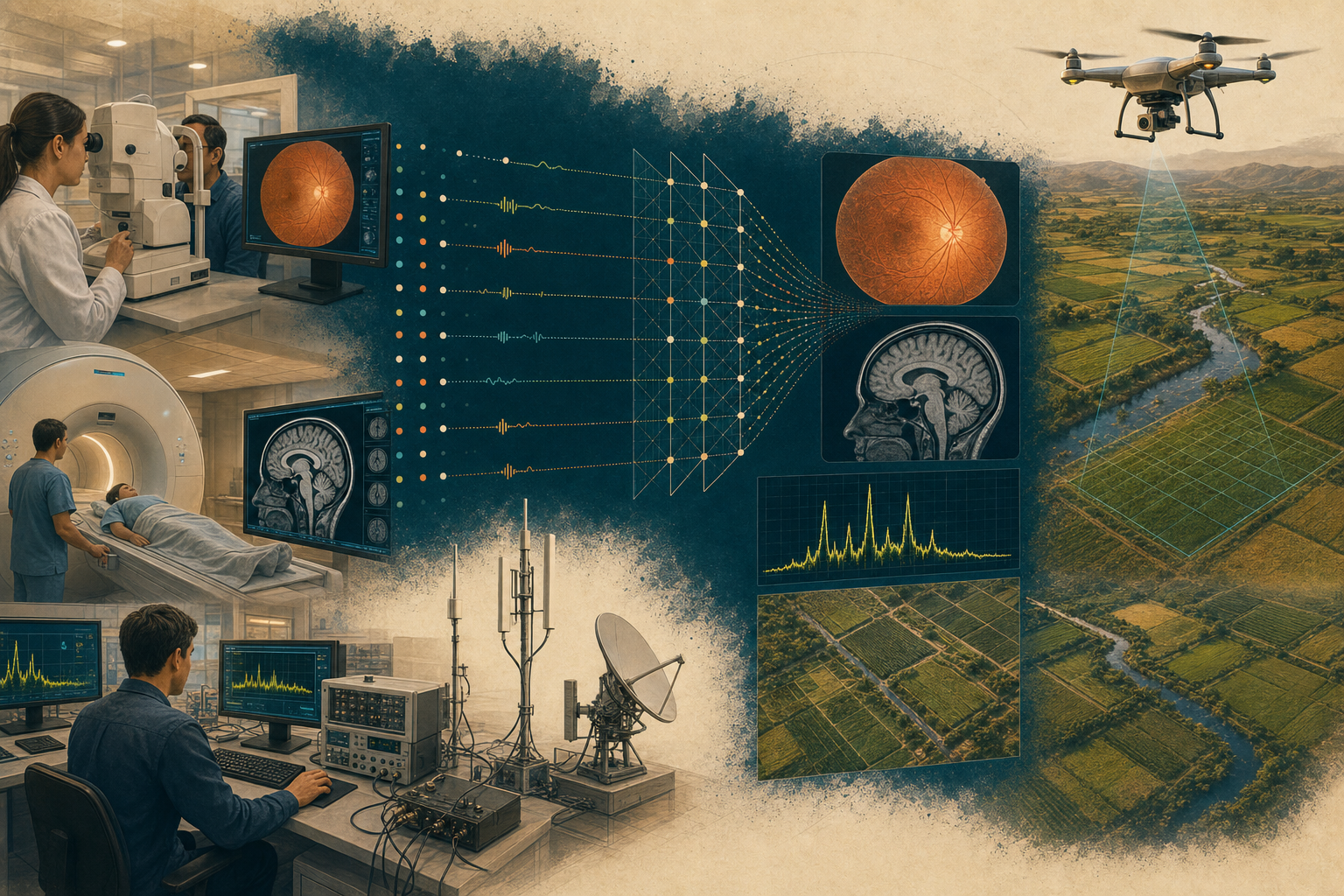
Real-world compressive sensing applications: retinal examination, MRI reconstruction, wireless spectrum monitoring, and drone-based agricultural imaging
Sparse measurements → reconstructed insight
  • Retinal imagingRecovering clinical detail
  • MRI reconstructionFewer measurements, useful structure
  • Spectrum monitoringSparse occupancy awareness
  • Precision agricultureRemote-sensing reconstruction
Visual study 02Sparse data, real-world impact: medicine, spectrum, and remote sensing.

Animated reconstruction study

03LinkedIn focus

LinkedIn profile / public professional snapshot

A research practice, pictured.

View current LinkedIn profile

LinkedIn foregrounds a wireless-communications career connecting Asia, Europe, and the Middle East—from doctoral training in Korea and academic work in Indonesia to postdoctoral research in Germany and Ireland, followed by current research at Khalifa University in Abu Dhabi.

Current affiliationKhalifa University

Abu Dhabi, United Arab Emirates

Professional identityPh.D. in Wireless Communications

Senior Member, IEEE / wireless communications researcher

Professional network1K+ followers

500+ connections on the public LinkedIn profile

Visible research conversation6G-ready wireless systems

RSMA/NOMA-ALOHA, resilient networks, telecom AI, and wireless timing

04Selected work

Continue exploring

Follow the signal.

Explore the verified professional timeline, DOI-linked publications, and wider research record across these academic and professional profiles.

LinkedIn profile photo of Dr. I Nyoman Apraz Ramatryana
Researcher snapshotI Nyoman Apraz Ramatryana
Khalifa University · Abu DhabiResearch · Teaching · ServiceUNU Yogyakarta · Indonesia